
 IT
IT  DE
DE  FR
FR  ES
ES  PT
PT 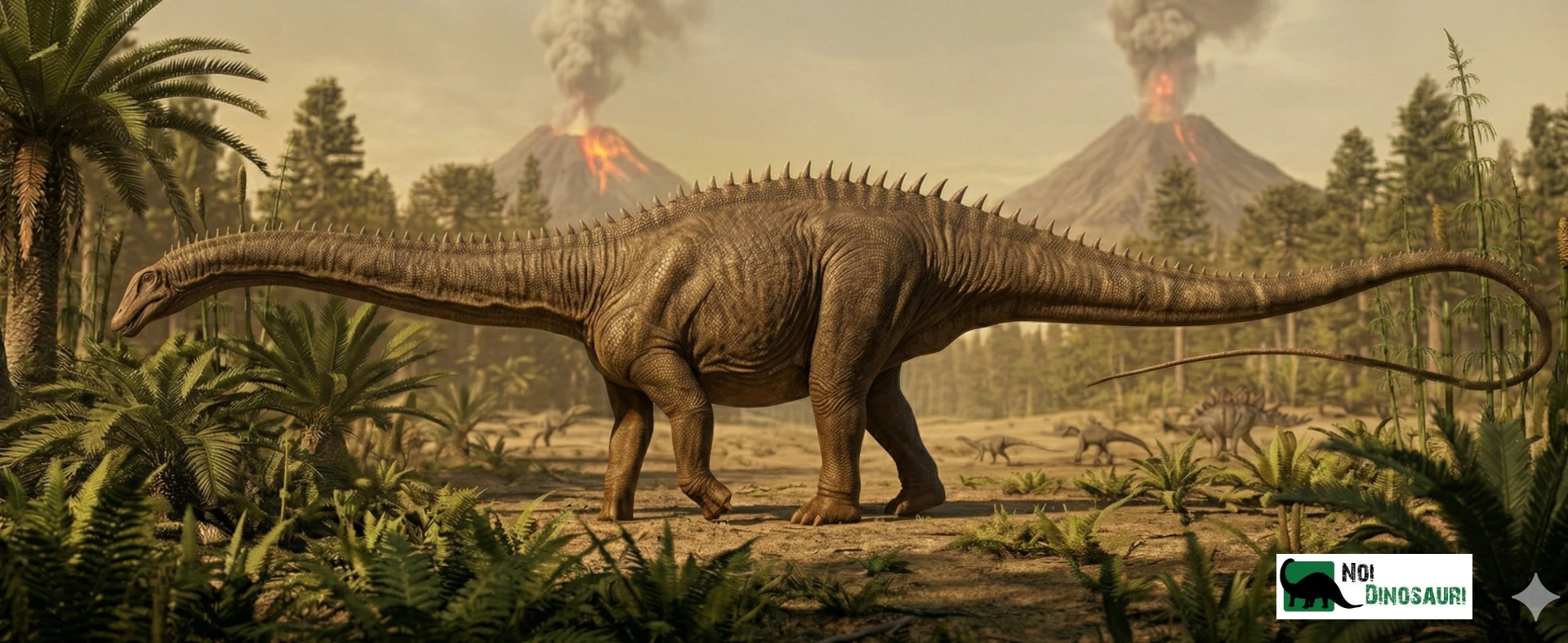
Diplodocus
Diplodocus stands as one of the most iconic and unmistakable sauropods ever discovered. This majestic herbivore roamed the vast plains of prehistoric North America during the Late Jurassic period (Kimmeridgian to Tithonian ages, roughly 154 to 152 million years ago). As a member of the Diplodocidae family, it represents an evolutionary pinnacle in anatomical adaptation for extreme body length. Unlike other giants of its time, Diplodocus didn't rely on sheer bulk. Instead, it thrived thanks to an extraordinarily slender, elongated bodily architecture.
Diplodocus: History, Characteristics, and Facts
The discovery of Diplodocus took place during the "Bone Wars," a ruthless and fiercely competitive golden age of American paleontology. Pioneering paleontologist Othniel Charles Marsh first described and named the genus in 1878, based on fossil remains unearthed in Colorado.
The name Diplodocus stems from the Ancient Greek diploos (double) and dokos (beam). This "double beam" moniker doesn't refer to the whole animal, but to a highly specific anatomical feature: the inverted, Y-shaped chevron bones on the underside of its tail. These bones provided crucial structural support and protected vital blood vessels whenever the massive tail dragged or rested on the ground.
Today, Diplodocus fossils are among the most widely displayed in museums globally. We largely owe this to the industrialist and philanthropist Andrew Carnegie. In the early 1900s, Carnegie funded the production of numerous casts of the famous Diplodocus carnegii skeleton—affectionately dubbed "Dippy"—and donated them to major European institutions, including London's Natural History Museum.
The Living Bridge: Body, Neck, and Defenses
Picture Diplodocus as a gigantic, biological suspension bridge. Four pillar-like limbs supported its suspended body. Because its front legs were slightly shorter than the hind ones, the dinosaur maintained a perfectly horizontal posture. Fleshy, elephant-like pads cushioned the broad hind legs to bear its immense weight. The front legs, however, featured a massive, single claw on the inner toe. Paleontologists suspect Diplodocus used this spur to excavate dry riverbeds for water during droughts, or perhaps as a rudimentary weapon for close-quarters defense.
The dinosaur’s incredibly long neck contained 15 vertebrae, heavily lightened by complex air sacs. Unlike a swan, Diplodocus didn't hold its neck vertically. A massive, elastic, V-shaped nuchal ligament ran down its spine, supporting the neck parallel to the ground. Its elongated skull was tiny compared to its colossal body and featured peg-like teeth restricted strictly to the front of the mouth. At the opposite end, the impossibly long tail tapered into a thin, whip-like structure.
The Armor of Scales and Spines
Unlike feathered theropods, fossil evidence proves Diplodocus sported a leathery, scaly reptilian hide. Paleontologist Stephen Czerkas revolutionized our understanding of sauropod skin in 1992 when he discovered exceptionally rare fossilized impressions at Howe Quarry in Wyoming. These impressions showed that Diplodocus skin wasn't smooth, nor did it feature large, overlapping plates. Instead, it consisted of a flexible mosaic of small, polygonal scales—much like modern iguanas or crocodiles. These scales varied in size across different body regions to maximize its range of motion.
Czerkas’s most sensational find, however, was a row of conical, keratinous spines reaching up to 18 centimeters (7 inches) tall. These spines ran straight down the animal's midline, from the base of the neck to the tip of the tail. Made of the same structural protein as human fingernails, they gave Diplodocus a distinctly "dragon-like" silhouette that broke up its outline on the horizon.
We haven't found preserved melanosomes to determine their exact color. However, juveniles likely exhibited countershading—a dark back and a light belly—to camouflage themselves within dense conifer forests. As they grew into virtually invulnerable adults, they probably faded to neutral grays or browns to aid in thermoregulation. The dorsal spines, however, might have served a different purpose. They could have featured vivid colors for sexual display, herd recognition, or to make the animal look even more imposing to predators.
The Heart, Blood, and Breath of a Colossus
How did a dinosaur the length of a basketball court oxygenate its massive body without constantly fainting? Pumping blood through a Diplodocus required a cardiovascular and respiratory system pushed to the absolute limits of biology and physics.
- The Hydraulic Heart: If Diplodocus naturally held its neck straight up, it would have required a heart weighing nearly two tons just to fight gravity and pump blood to the brain. Furthermore, if the dinosaur then lowered its head to drink, the resulting blood pressure spike would have burst its cerebral vessels. By keeping its neck horizontal, its powerful, four-chambered heart could efficiently distribute massive volumes of blood sideways without fighting extreme gravitational gradients.
- One-Way Valves: To handle minor pressure changes when raising or lowering its head, the dinosaur relied on enormous jugular veins lined with a dense network of one-way valves. This pressure-buffering system stopped blood from flowing backward or pooling dangerously inside the skull, preventing the giant from blacking out every time it moved its head.
- Unidirectional Breathing: Much like modern birds, Diplodocus possessed a highly efficient, unidirectional respiratory system. Its rigid lungs connected to a vast network of air sacs extending throughout its body and infiltrating its hollow bones (a process called skeletal pneumatization). During inhalation, fresh air bypassed the lungs and filled the rear air sacs. Upon exhalation, the body pushed that fresh air into the lungs, while simultaneously expelling stale air from the front sacs. The result? The lungs received a constant stream of oxygen-rich air during both inhalation and exhalation. With just a few slow, deep breaths, this colossus could fully oxygenate a body the size of a bus, fueling the intense metabolism required for long treks across the Jurassic plains.
To understand the true scale of Diplodocus, we have to separate its staggering length from its actual mass. While it was incredibly long, Diplodocus was far from the heaviest dinosaur; its build was actually quite gracile for a sauropod.
The most famous species, Diplodocus carnegii, reached roughly 24 to 26 meters in total length. The largest species—once named Seismosaurus but now reclassified as Diplodocus hallorum—approached 29 to 32 meters. Yet, thanks to its lightweight skeletal structure and extensive internal air sacs, D. carnegii weighed an estimated 11 to 15 tons. That’s roughly the weight of two to three adult African elephants.
Being so lightly built also debunks an old B-movie myth: Diplodocus did not live submerged in swamps to support its own weight. Its powerful limbs and narrow, deep ribcage clearly prove it was perfectly adapted for a strictly terrestrial lifestyle.
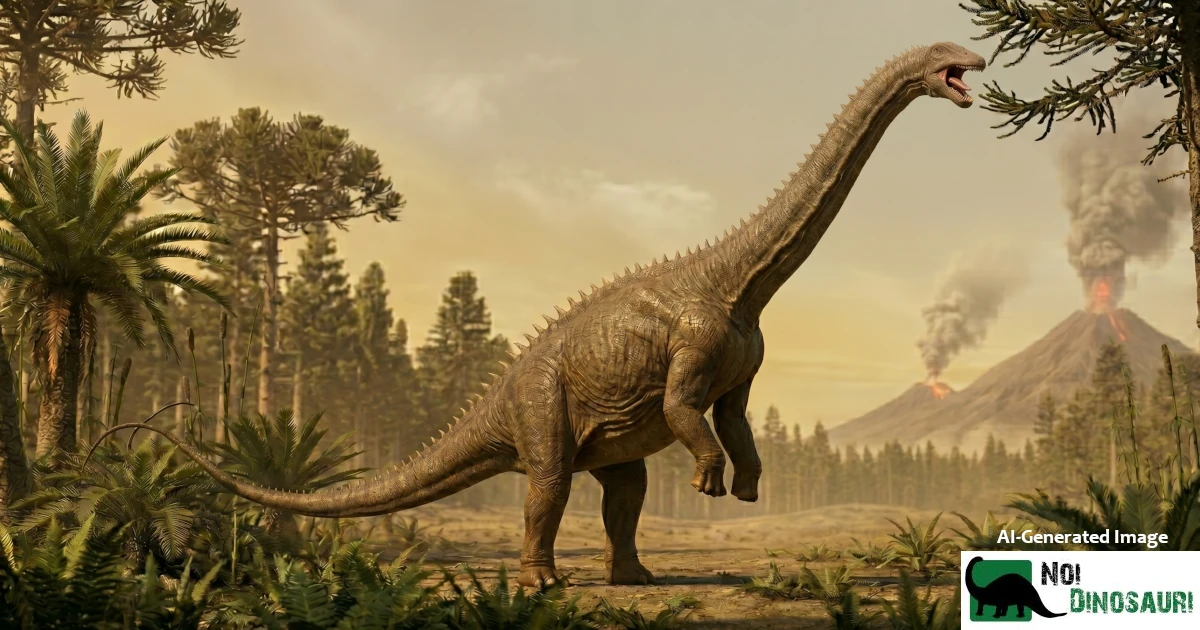
Diplodocus inhabited the ancient supercontinent of Laurasia, specifically thriving in the region we now know as western North America (the famous Morrison Formation). This ecosystem wasn't a dense, steamy tropical jungle. Instead, it featured a mosaic of seasonal floodplains, semi-arid savannas, and lush gallery forests lining the waterways. True grasses and flowering plants hadn't evolved yet. Ferns, cycads, horsetails, and towering forests of conifers and ginkgos dominated the landscape.
As a low-browser, Diplodocus used its peg-like teeth to literally "comb" branches and ferns, stripping away leaves and swallowing them whole without chewing. Contrary to older theories, it didn't swallow rocks (gastroliths) to grind food in a gizzard, a fact confirmed by a 2007 study in the Proceedings of the Royal Society B.
Instead, the unchewed plant matter traveled into a colossal digestive tract that acted like a biological fermentation vat. Through extremely slow intestinal transit—which could take up to two weeks—billions of symbiotic gut bacteria chemically broke down the tough cellulose, extracting every possible calorie.
Diplodocus shared this harsh ecosystem with other iconic giants like Apatosaurus, Brachiosaurus, and Stegosaurus. These herbivores avoided direct competition by niche partitioning, feeding at different heights based on their neck lengths. Diplodocus also had to stay constantly vigilant to survive the apex predators of the era, such as the ferocious Allosaurus and the formidable Ceratosaurus.
Curiosity - Did you know?
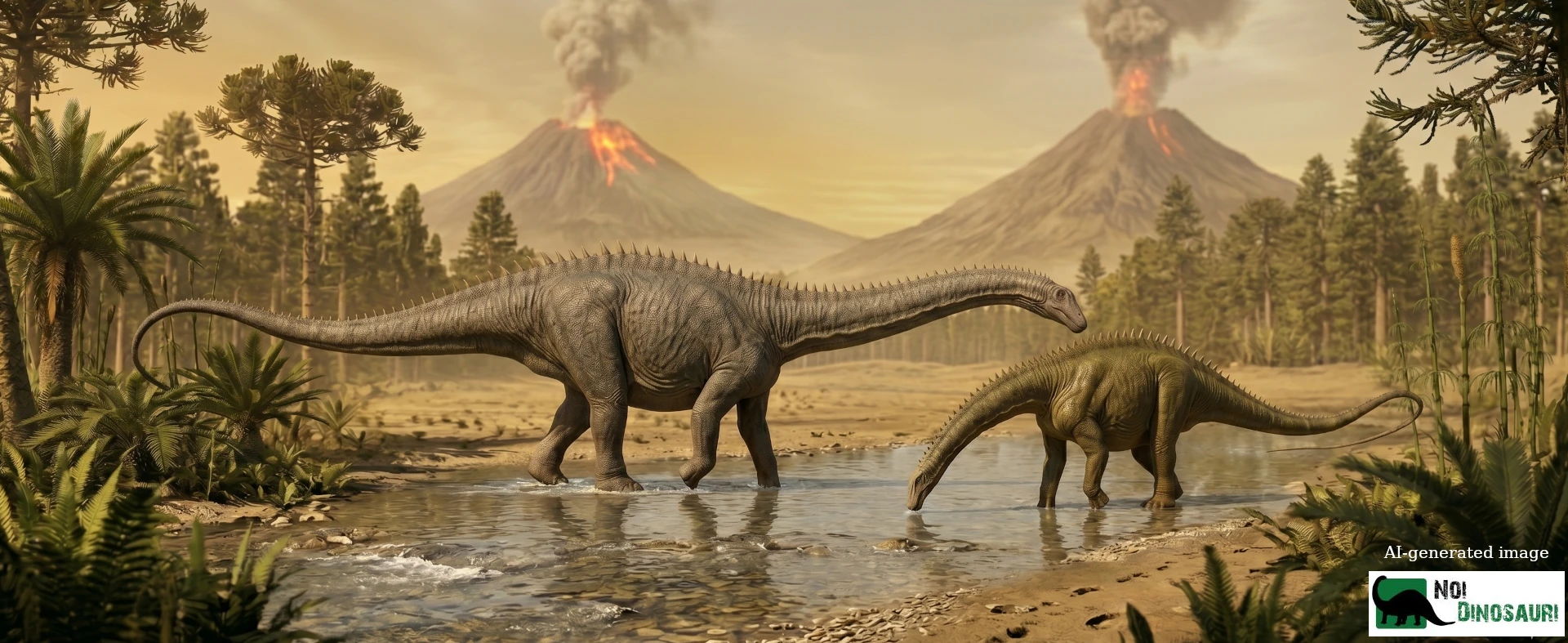
Advanced computational models and biomechanical simulations suggest Diplodocus wielded its thread-like tail as a gigantic bullwhip. By sharply flicking it, the animal could propel the tail's tip past the speed of sound—exceeding 1,200 km/h (750 mph)—generating a literal sonic boom that would echo for miles. Paleontologists believe the dinosaur didn't use this as a physical weapon to strike predators, as the fragile tail tip would have shattered on impact. Instead, the deafening crack likely served as an acoustic deterrent to terrify approaching Allosaurus packs or as a loud signaling tool to establish dominance within the herd.