
 IT
IT  DE
DE  FR
FR  ES
ES  PT
PT 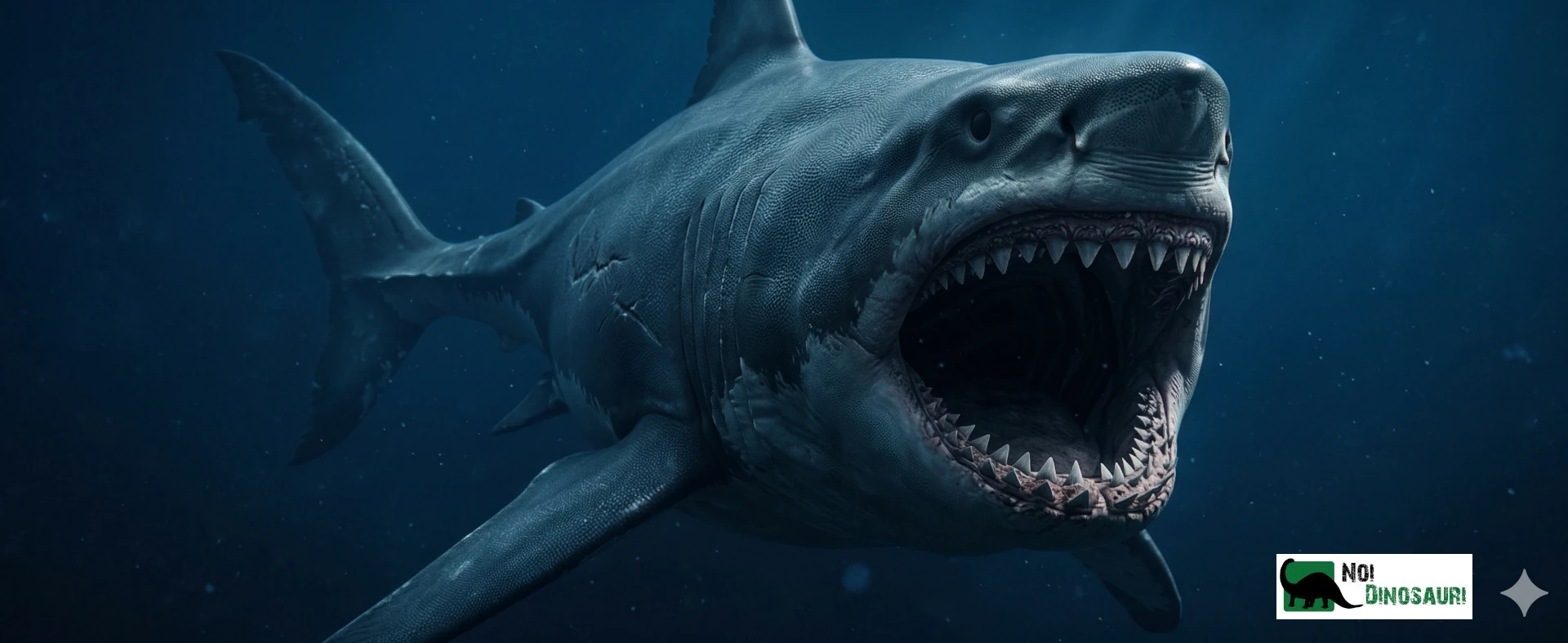
Megalodon
The Megalodon (Otodus megalodon) was a colossal extinct shark belonging to the family Otodontidae. Let's clear up a common misconception right away: it wasn't a dinosaur or a marine reptile, but a cartilaginous fish — an elasmobranch (a fish with a skeleton made of cartilage rather than bone). It prowled the warm and temperate waters of nearly the entire planet across a vast span of time, from the Early Miocene to the Early-Middle Pliocene, reigning as the undisputed apex predator of the prehistoric seas.
Megalodon: History, Characteristics, and Facts
Humanity has marveled at the massive fossilized teeth of the Megalodon since classical antiquity. For centuries, though, people mistook these relics for petrified "tongue stones" — the tongues of dragons or giant serpents, turned to stone. The breakthrough came in 1667, when the anatomist Nicolas Steno dissected the head of a great white shark caught off the coast of Livorno. He was the first to grasp the true nature of these fossils, documenting his findings in the treatise Canis Carchariae Dissectum Caput and identifying the "tongue stones" for what they really were: fossilized shark teeth.
In 1843, the paleontologist Louis Agassiz gave the creature its famous name, Carcharodon megalodon — Greek for "big tooth." Today, its most significant remains — primarily enamel teeth and a handful of calcified vertebrae — stand as prized specimens in the collections of institutions like the Natural History Museum in London and the Smithsonian in Washington, D.C.
A Titanic Trap (Bite Force)
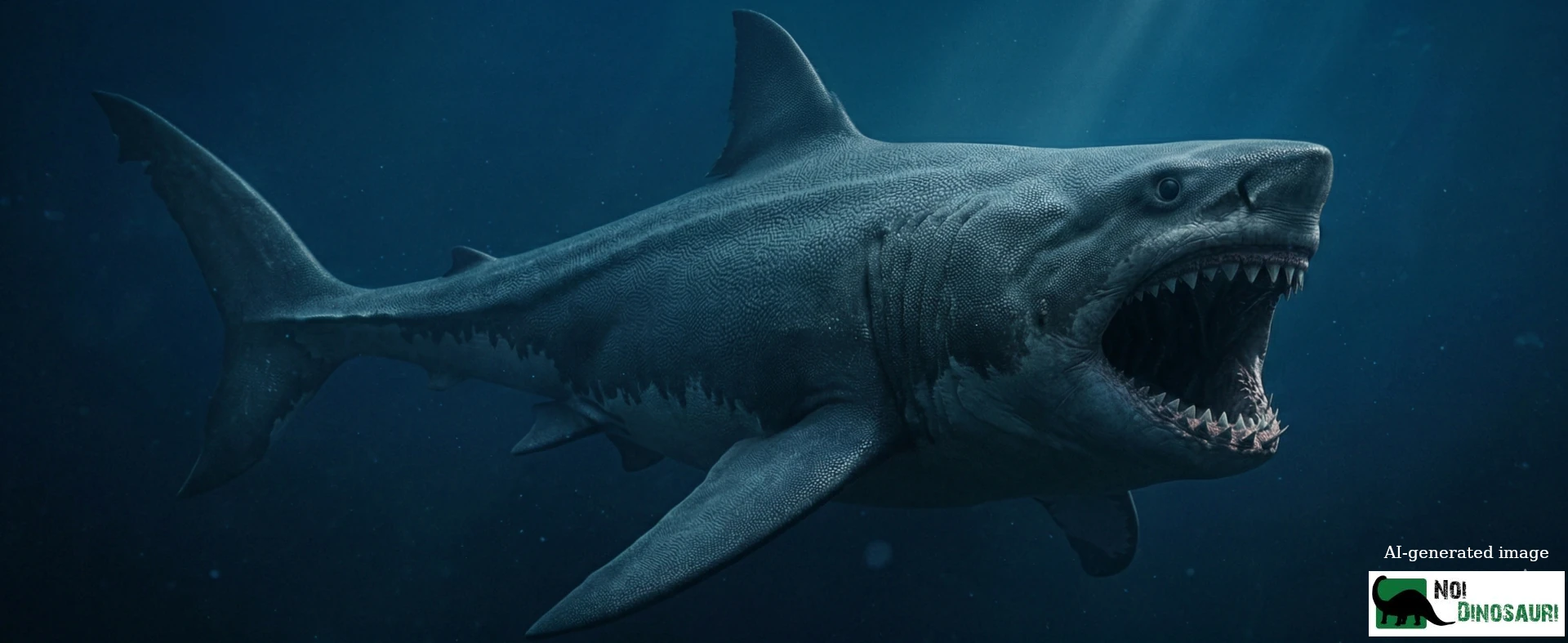
Imagine a bony trap capable of swallowing a compact car in a single, lethal bite. Forget the cinematic exaggerations: Otodus megalodon was a genuine masterpiece of predatory engineering. As long as an articulated city bus, it cut through prehistoric oceans with the unstoppable mass of an attack submarine. Its teeth, thick and broad as an adult human's palm, were no simple conical fangs. They were serrated blades, their edge as sharp as a professional chef's bread knife, built to slice cleanly through the thick flesh and blubber of large cetaceans.
A Radar in the Dark (Electroreception)
In pitch darkness or murky water, the Megalodon had no need for sight. It sensed the electric field and heartbeat of its prey through electroreception, a finely tuned sense powered by specialized organs called the ampullae of Lorenzini, scattered across its snout. It wasn't a sonar in the technical sense — it emitted no signal, only "read" the bioelectric signals of others passively — but the practical effect was much the same: a biological early-warning system that could locate prey at a distance, without ever needing to see it. It didn't strike at random; it aimed with surgical precision at a whale's fins or lungs to immobilize it first.
How do we know this? Without complete fossil skeletons to study, paleontologists fed the extremely rare fragments of calcified jaw cartilage into 3D biomechanical simulators. The first systematic study, led by Stephen Wroe and colleagues in 2008, calculated the Megalodon's bite force by extrapolation — starting from a digital model built from the head of a great white shark just 2.5 meters long, then scaling it up to the conservatively estimated body mass of an adult Megalodon. The result was a range of 108,000 to 182,000 newtons: a devastating force, capable of crushing the ribcage of a whale the size of an armored van, snapping its ribs like breadsticks. In 2022, a new study led by Jack Cooper and colleagues built the first 3D model based directly on Megalodon's own anatomy, using rare fossil vertebrae rather than extrapolating from another species. This more direct approach produced a higher body mass estimate — over 60 tons for a 16-meter individual, well above the more conservative 2008 figures — confirming and reinforcing the force range calculated in 2008, which remains the most solid benchmark available to the scientific community today.
The Caress of Sandpaper (Skin and Coloration)
If you'd swum alongside it and dared to brush against its skin, you wouldn't have felt the smoothness typical of fish. You'd have scraped your hand raw on contact. Its body was covered in millions of microscopic dermal denticles — a rough, intensely abrasive hydrodynamic armor, much like industrial sandpaper. Visually, it must have looked like a silent ghost: evolution had painted it slate-gray on top, to vanish into the depths when seen from above, and chalk-white underneath, to blend with the sun's glare when seen from below (countershading).
Diaries Written in Phosphorus (Vertebral Growth Rings)
The largest shark in history left no monumental skeleton behind in any museum. Cartilage decomposes and vanishes, swallowed by the ocean. Megalodon's legacy survives almost entirely in the phosphorus and calcium of the teeth it shed on the seafloor.
How do we know so much about its life, then? The secrets of its biology were unlocked by modern medical technology. By running micro-CT scans (computed tomography) on the very few fossil vertebrae ever found — each one as wide as a serving platter — researchers discovered internal growth rings. Reading them exactly like the rings in the trunk of an ancient tree, scientists proved that these titanic predators could live, hunt, and rule the seas for over a century.
Pop culture and cinema constantly inflate the Megalodon's size, portraying it as a colossal monster over 25, even 30 meters long. Rigorous paleontology firmly debunks these fantasies. Based on the ratio between tooth crown width and body length in living sharks, the most up-to-date scientific estimates put its maximum length between 15 and 16 meters, with only the rarest exceptional individuals possibly approaching 18. Its estimated weight falls between 50 and 60 tons. Even scaled down from the movies, it remains one of the largest and most massive predatory fish the Earth has ever known.
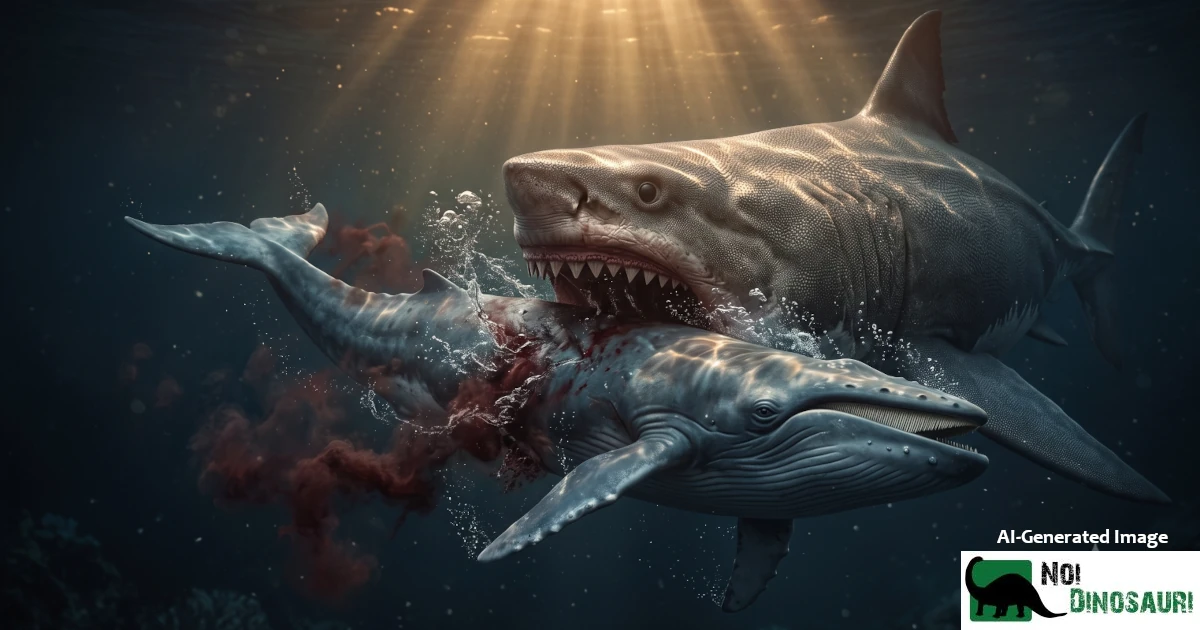
The Megalodon's diet centered almost entirely on the abundant marine mammals of the Cenozoic, demanding a massive daily caloric intake to sustain its bulk. It hunted with brutal, targeted strategies, striking at the belly or pectoral fins to immobilize its victims before delivering the killing bite. It swam through a global, cosmopolitan ocean without modern borders: the Isthmus of Panama had not yet closed, allowing the apex predator to move freely between the currents of the Atlantic and the ancient Pacific. It favored rich, temperate pelagic waters, but also made use of shallow coastal basins and sheltered bays as nurseries for its young. The coastlines of this warmer world were dominated by sprawling mangrove forests and lush underwater kelp meadows. It shared, and fiercely contested, this extreme ecosystem with other giants. Among its favored prey were the cetotheres — small baleen whales such as Piscobalaena or Cetotherium — along with early sirenians and large pinnipeds. Its chief rival for marine supremacy was Livyatan melvillei, a monstrous, hyper-carnivorous sperm whale armed with teeth over 30 centimeters long.
Reproduction
Born Already Giants
The Megalodon didn't lay eggs — it was ovoviviparous, just like today's great white shark. Females gave birth to live young, already fully formed, after a gestation period scientists estimate at 12 to 18 months. But the real surprise about this species lies in the size of its newborns: based on the growth rings found in fossil vertebrae, researchers calculate that pups measured between 2 and 4 meters at birth, depending on the study and the specimen analyzed. To put that in perspective, a newborn Megalodon could already be longer than three adult men lying head to toe — and rival the size of a fully grown great white shark today.
Siblings Against Siblings
How do you explain a birth size so out of proportion? The most widely accepted explanation points to a behavior as effective as it is ruthless: intrauterine oophagy, already documented in living sharks such as the sand tiger shark (Carcharias taurus). Inside the womb, the most developed embryos feed on unfertilized eggs and, at times, devour their weaker siblings outright. The result is a small litter — perhaps just 2 to 6 pups per pregnancy — but one made up of individuals that are already enormous, with very high odds of survival from day one.
Nurseries on the Coast
Once born, young Megalodons didn't stay close to their mother — there was no parental care waiting for them. Instead, they sought refuge in true natural nurseries: warm, shallow coastal bays rich in food, where they could grow up sheltered from the great predators of the open ocean. Fossil deposits containing nothing but juvenile teeth — like those found at the Gatún Formation in Panama, the Calvert Formation in Maryland, and sites in the Canary Islands — bear witness to these protected nursery grounds, used by the species for millions of years across different corners of the planet.
The Extinction
Not a Cataclysm, but a Slow Decline
Contrary to what one might expect, the Megalodon didn't disappear because of a sudden catastrophic event, like a meteor impact or a volcanic eruption. Its end was a slow process, unfolding over millions of years during the Pliocene. On the exact timing, the scientific community remains divided between two hypotheses, neither considered definitive today: a rigorous 2019 reanalysis of the fossil record places the species' extinction around 3.6 to 3.5 million years ago, in the Early Pliocene; other studies, based on more traditional dating methods, push it as late as the Pliocene-Pleistocene boundary, around 2.6 million years ago. It's possible the Megalodon didn't vanish everywhere at once — its disappearance may have been asynchronous, with regional populations dying out at different times depending on the area.
A Cooling Planet
Between the Miocene and the Pliocene, the layout of continents and oceans changed dramatically. The gradual closing of the Isthmus of Panama reshaped global ocean currents, while the planet entered a cooling phase that gave rise to the modern polar ice caps. This climatic upheaval pushed whales — the Megalodon's main food source — toward polar waters: colder, but richer in nutrients. For a multi-ton giant adapted to warm and temperate waters, following its prey beyond the polar circles was likely impossible.
The Unexpected Rival
Alongside the climate factor, recent science has identified a second force behind the decline: the small, agile great white shark (Carcharodon carcharias). Isotopic analysis of fossil teeth — based on the ratio of zinc isotopes, an indicator of position in the food chain — revealed that, right around the Early Pliocene, the diets of the Megalodon and the earliest great whites began to overlap significantly. Despite being vastly smaller, the great white was faster, more energy-efficient, and able to exploit a wider range of prey. Direct competition for the same food sources — already strained by the changing climate — may have delivered the final blow to a predator whose own size, paradoxically, had become its greatest weakness: an adult Megalodon needed an enormous daily caloric intake just to survive, one that grew harder to meet in an ocean increasingly short on large prey.
A Legacy in the Food Chain
With the Megalodon's extinction, the ocean lost its ultimate apex predator — but the marine ecosystem didn't collapse. It reorganized. The ecological niches left empty were gradually filled by new players, among them the orca, which around this very period began to rise as a social, versatile superpredator — the ancestor of the ocean balance we recognize today.
Curiosity - Did you know?
A Bite Strong Enough to Shatter a Ribcage: The Megalodon's bite is considered one of the most powerful in the history of the marine animal kingdom, with an estimated force between 108,000 and 182,000 newtons. To put that in perspective, that's roughly 10 times the bite force of a modern great white shark — more than enough to instantly shatter the entire ribcage of a small whale.