Velociraptor
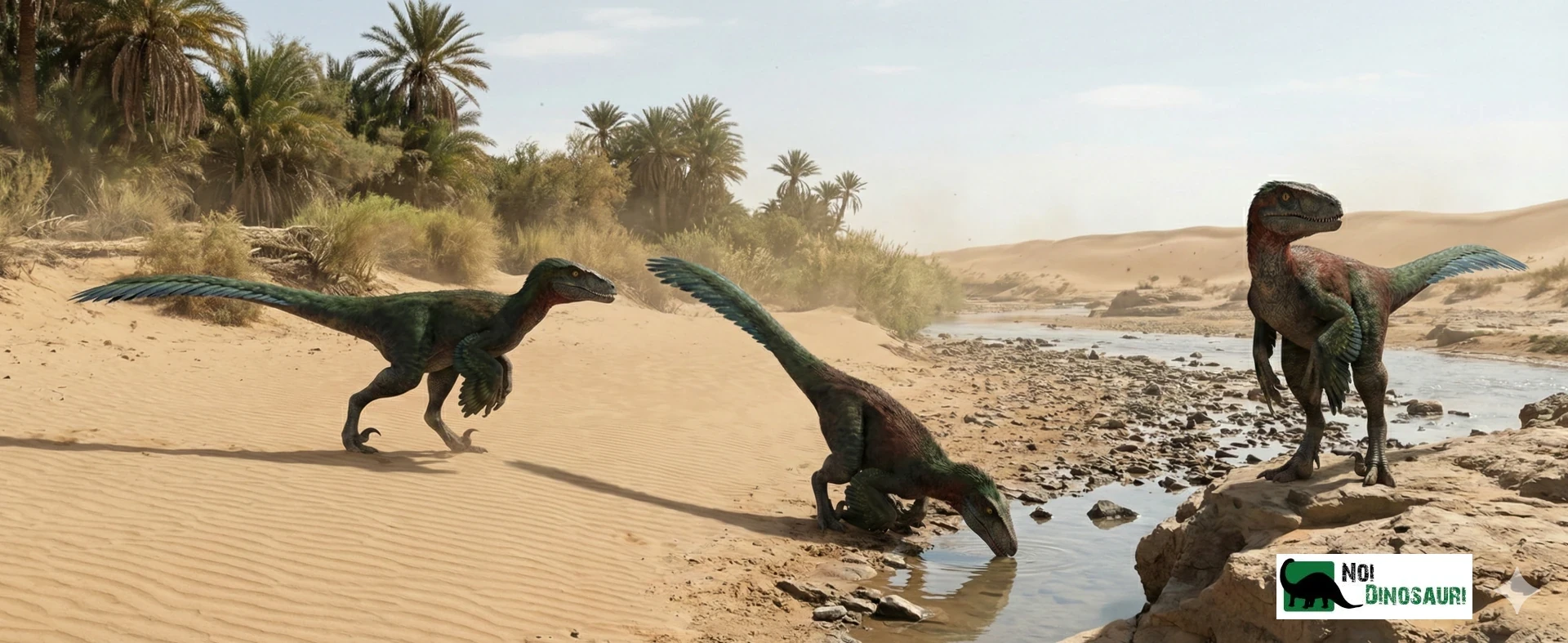
Velociraptor (genus Velociraptor, comprising the valid species V. mongoliensis and V. osmolskae) was a theropod dinosaur belonging to the dromaeosaurid family. It stalked the arid regions of Central Asia during the late Cretaceous period (Campanian stage), between 75 and 71 million years ago. Paleontology has dismantled its cinematic reconstruction, revealing the animal's true biology. A predator covered in feathers. Small, agile, lethal. Engineered for survival among the shifting desert sands.
Velociraptor: Curriculum Vitae of the species
August 1923 marks the extraction of the first specimen. The Gobi Desert, Mongolia. An expedition from the American Museum of Natural History, led by Peter Kaisen and Roy Chapman Andrews, unearthed a crushed skull paired with a sickle claw. In 1924, paleontologist Henry Fairfield Osborn officially described the fossil. The name stems from strict etymological synthesis: from the Latin velox (swift) and raptor (robber or plunderer). Today, primary casts and original remains from Mongolia and China are archived and studied at the American Museum of Natural History in New York and the Central Museum of Mongolian Dinosaurs in Ulaanbaatar.
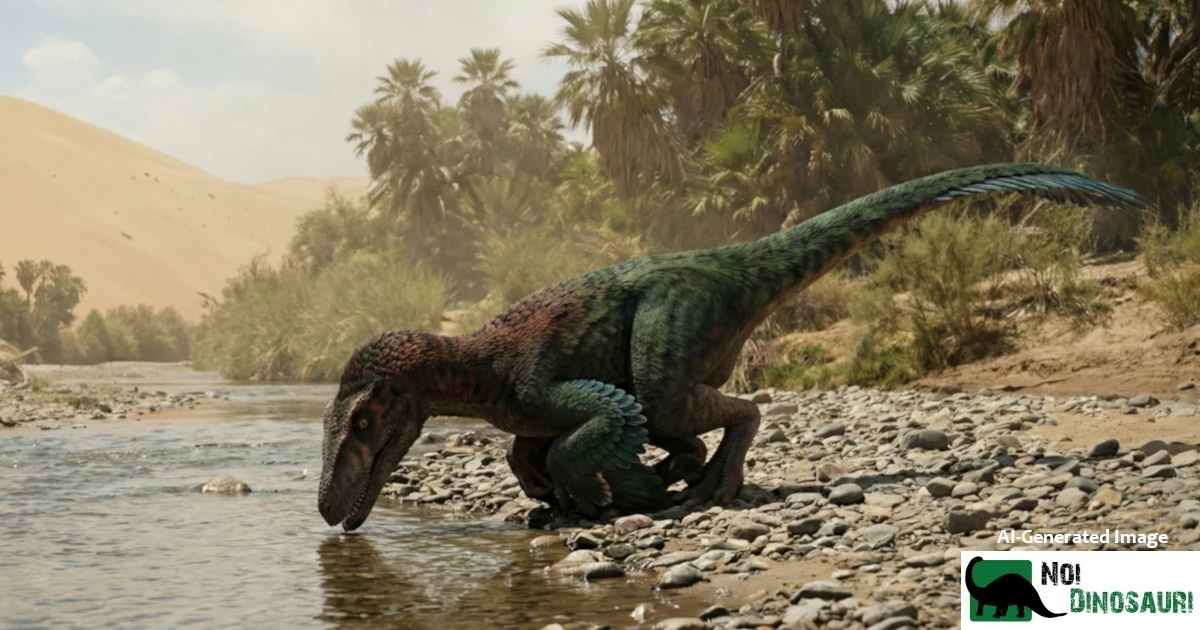
The anatomy of Velociraptor outlines a predator with a skeletal framework and plumage entirely analogous to modern ground-dwelling birds. It was fully covered in feathers, featuring developed, asymmetrical remiges anchored to its forelimbs. In modern birds, these asymmetrical feathers guarantee flight. Velociraptor did not fly. Physical evidence followed in 2007 with the identification of quill knobs (ulnar papillae). These small bony bumps prove the attachment of large feathers: arms identical to wings, mounted on a body too heavy and lacking the pectoral musculature required for takeoff.
The skull shatters the blunt-snouted pop-culture myth. The animal possessed an elongated, narrow, and low snout. The upper jaw was concave, curving slightly upward. The oral cavity contained 60 to 64 teeth, widely spaced and heavily serrated along the edges to tear muscle tissue.
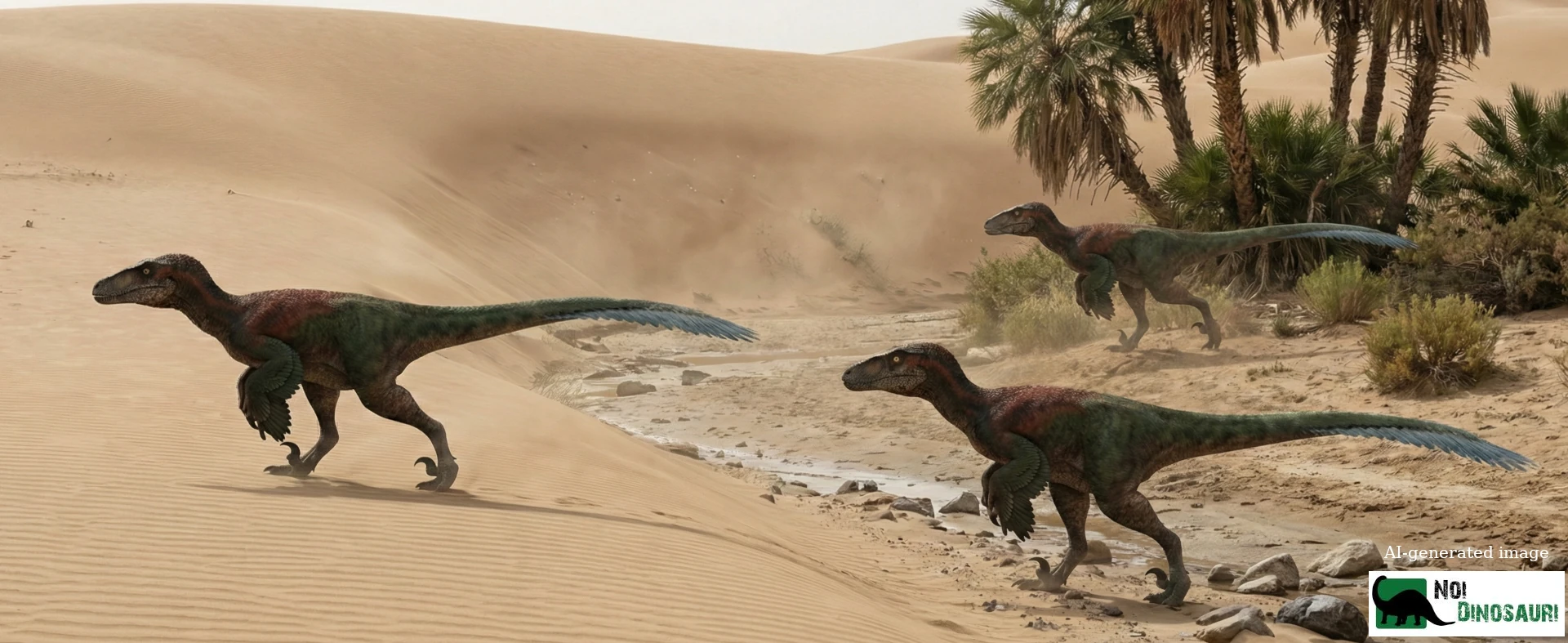
Tail biomechanics relied on rigidity. A dense network of ossified tendons and vertebral extensions prevented fluid movement. It did not whip. It acted as a rigid bar. It functioned as a directional rudder and aerodynamic counterbalance to absorb forces during high-speed turns. The skeleton was lightened by hollow bones, a structural trait shared with Archaeopteryx and modern avifauna, making it a formidable sprinter.
The precision weapon resided in the hind legs. The second toe of each foot was armed with a retractable sickle claw measuring up to 6.5 centimeters. Biomechanical tests show it was not used for disemboweling. It acted as a grappling hook. The animal latched on to stabilize itself on the prey's body and pierce vital arteries, applying the exact hunting technique of contemporary eagles. The assault was calculated through large, forward-facing eyes, ensuring binocular vision essential for zero-error distance estimation.
The giant lizard of the silver screen mimics the proportions of Deinonychus, a much bulkier North American theropod. The actual dimensions of Velociraptor barely exceeded those of a large turkey or a small wolf. A mature specimen reached 2 meters in total length, with the stiff tail accounting for over 50% of that extension. Hip height stopped at 50 centimeters. The body volume registered a mere 15 to 20 kilograms. An ultralight morphology that completely sacrificed brute force to maximize power-to-weight ratio and agility.
A strictly terrestrial carnivore and ambush predator. Velociraptor targeted reptiles and mammals, bringing down medium-sized herbivores with short-range sprints. Fossils originate from the Djadochta Formation, a stratigraphic unit outcropping in modern-day Mongolia and Northern China, once part of the massive Laurasian landmass.
The Campanian habitat was severe. Vast sand dune systems were fragmented only by rare seasonal streams. Leathery ferns, cycads, and rare primitive conifers endured in scattered oases. In this drought-dominated ecosystem, the feathered theropod shared the food chain and living space with the ceratopsid Protoceratops, the armored ankylosaur Pinacosaurus, the bird-like theropod Oviraptor, and small insectivorous mammals of the genus Zalambdalestes.
Curiosity - Did you know?
Taphonomy has produced one of the most crucial direct evidences in the history of paleontology: the Fighting Dinosaurs. Discovered in 1971 by a Polish-Mongolian team deep within the Gobi Desert, the fossil locks a real hunting dynamic in stone. A Velociraptor engaged in a lethal clash against a Protoceratops.
Geological analysis indicates instantaneous burial, caused by the collapse of a rain-soaked dune over the fighting beasts. The sandstone block shows the predator's sickle claw jammed into the herbivore's throat, while the Protoceratops crushes the raptor's right arm, clamped shut in its bony beak. An uncontaminated prehistoric freeze-frame.
IT
DE
FR
ES
PT