
 IT
IT  DE
DE  FR
FR  ES
ES  PT
PT 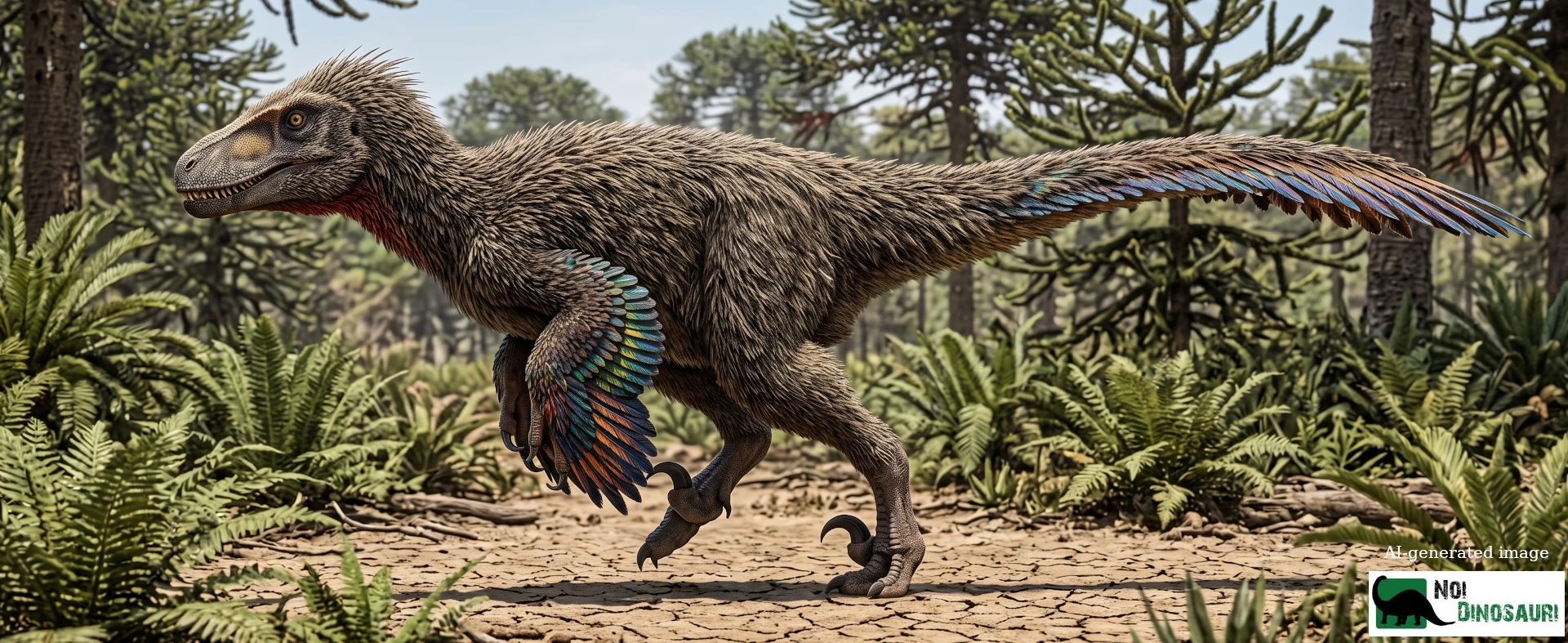
Utahraptor
Utahraptor ostrommaysi is a theropod dinosaur and the largest known member of the dromaeosaurid family—the group popularly known as "raptors." This formidable carnivore dominated North America during the Early Cretaceous. It established itself as an apex predator, capable of taking down prey much larger than itself. Unlike its smaller, highly agile relatives, Utahraptor sacrificed pure speed for devastating physical power. It combined a massive, muscular build with lethal biological weaponry.
Utahraptor: History, Characteristics, and Facts
The official discovery of Utahraptor occurred in 1991. A team of paleontologists led by James Kirkland, Robert Gaston, and Donald Burge unearthed the first bone fragments in Utah's Cedar Mountain Formation. The genus name translates literally to "Utah's thief." Its specific epithet, ostrommaysi, honors John Ostrom—a pioneer of the dinosaur-bird link theory—and Chris Mays, founder of Dinamation.
Today, research on this animal centers around the renowned "Utahraptor Megablock." Recovered in 2001, this colossal 9-ton sandstone boulder is currently undergoing meticulous preparation at the Utah Geological Survey. This block acted as a prehistoric quicksand trap. It contains the intertwined remains of a large iguanodont bogged down alongside at least six Utahraptor specimens of varying ages. The predators likely approached expecting an easy meal, only to sink into the deadly mud themselves.
Forget the agile, scaly lizards you see in movies. Picture a grizzly bear with the agility of a wolf, armed with harvesting sickles on each foot. Utahraptor did not simply sprint toward its prey; it struck like an unstoppable force of nature.
Its primary weapon was the massive sickle claw on its second toe, reaching up to 24 centimeters (9.4 inches) in length. It functioned as a curved combat knife, held perpetually off the ground to protect its razor edge. Furthermore, its leg bones weren't slender like those of smaller raptors. They were remarkably thick and heavily reinforced to support immense physical stress.
Evolution built this animal for close-quarters combat, not hundred-meter dashes. If Velociraptor was a lightweight sniper, Utahraptor was a heavily armored tank. It was designed to grapple massive prey, drive its claws deep into flesh, and tear with devastating bites.
Iridescent Feathers and Stiff Bristles
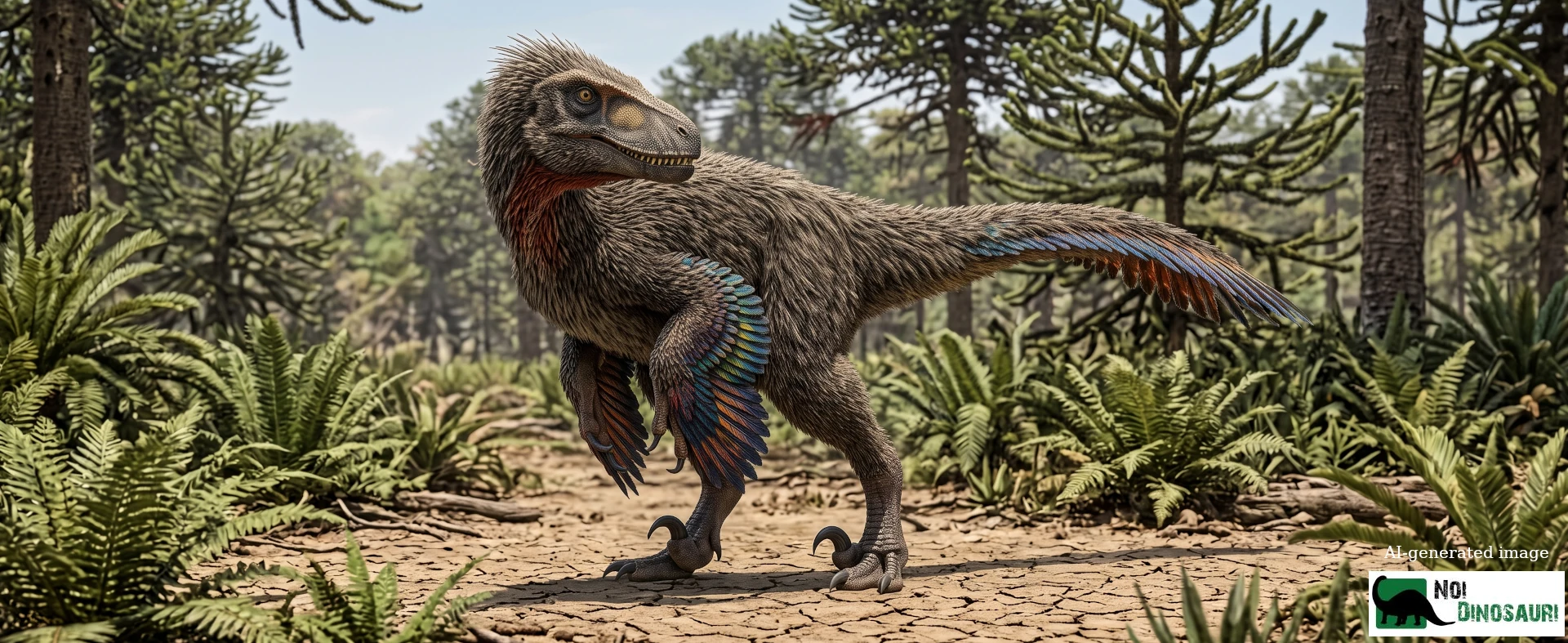
If you ran your hand along its flank, you wouldn't feel cold reptilian scales. Dense plumage covered its skin, but don't imagine the softness of a modern dove. To the touch, its feathers felt more like the stiff bristles of an industrial brush or the harsh, wiry coat of a modern cassowary.
This plumage provided vital thermal insulation, but it likely exploded into vivid colors on the forearms and tail. The dinosaur probably used these highly visible structures to intimidate rivals or communicate across the dense forest floor. We know it looked this way thanks to phylogenetic bracketing. Bones of its smaller cousins display ulnar papillae—direct anchor points for large flight feathers—proving the entire dromaeosaurid family was heavily feathered.
Pack Hunting: A Plausible Hypothesis?
Did these giants hunt in packs? The Megablock offers a compelling clue. The presence of multiple individuals of different ages dying together in the same mud trap strongly suggests some form of group dynamic.
However, the exact nature of this behavior remains a mystery. It might have been opportunistic mobbing, similar to how modern Komodo dragons operate. In this scenario, individuals were drawn independently to the distress calls of a struggling animal. Alternatively, it could represent a more structured, social hunt comparable to wolf packs. Paleontologists haven't reached a definitive consensus, leaving this one of the most hotly debated aspects of dromaeosaurid biology.
A Predatory Computer in the Skull
Utahraptor wasn't merely a killing machine driven by blind instinct. Its skull housed an unusually large brain for a dinosaur. Using modern micro-CT scanning on dromaeosaurid braincases, scientists have successfully reconstructed the shape of its neural cavity.
These scans reveal massive optic lobes and highly developed olfactory bulbs. This suggests its visual field rivaled that of a modern eagle, allowing it to focus on the slightest movement among the branches from hundreds of meters away. Meanwhile, its keen sense of smell could track the scent of fresh blood carried on the wind. You couldn't hear it coming; by the time you saw it, it was already too late.
The true size of Utahraptor often astonishes the public. It perfectly matches the exaggerated proportions of the pop-culture "raptors" popularized by 1990s cinema. In paleontological reality, an adult reached a maximum length of 5 to 7 meters (16 to 23 feet).
However, its weight truly sets it apart from its kin. Updated estimates suggest a body mass between 250 and 500 kilograms (550 to 1,100 lbs), rivaling a modern grizzly or polar bear. This incredibly robust build confirms it wasn't a frail, lightweight runner, but a massively powerful apex predator.
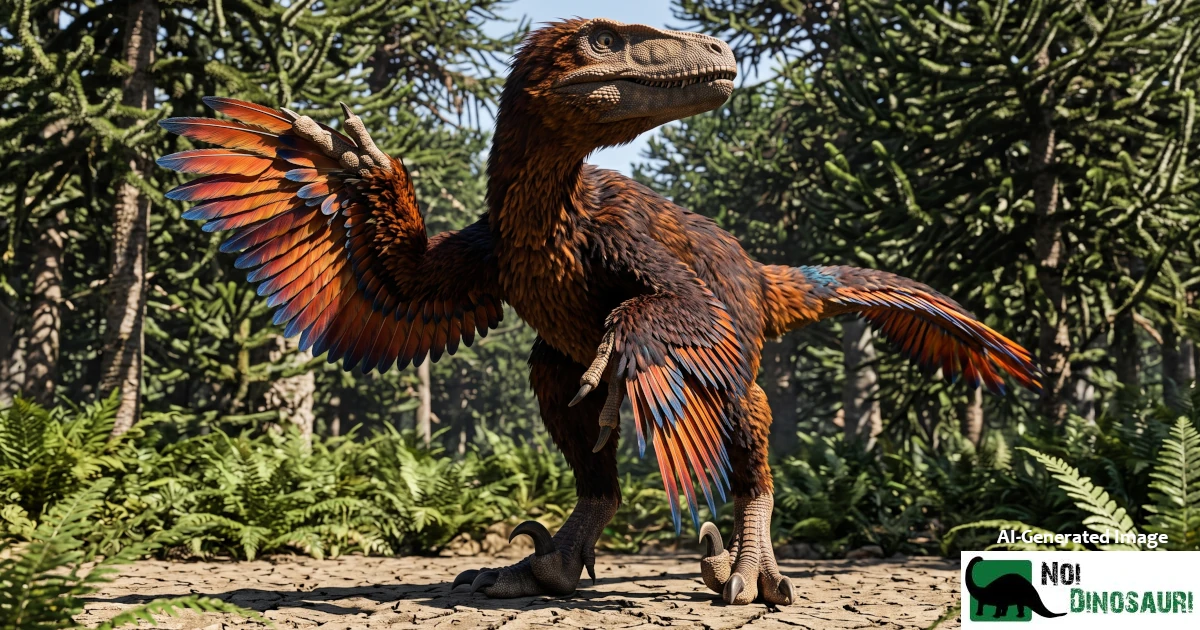
Utahraptor was a strict carnivore. Its hunting strategy relied on ambush tactics and sheer, deadly power. Scientists call this the Raptor Prey Restraint (RPR) model. The predator used its immense weight to pin prey to the ground while its sickle claws inflicted fatal damage.
This carnivore prowled the ancient supercontinent of Laurasia. Its ecosystem featured vast, semi-arid floodplains governed by distinct wet and dry seasons. Open conifer forests, dense undergrowth of ferns, and the very first flowering plants (angiosperms) thrived here. In this prehistoric arena, Utahraptor shared its territory with large herbivorous dinosaurs. Its ecosystem included the iguanodonts Iguanacolossus and Hippodraco, the heavily armored Gastonia, and long-necked sauropods like Cedarosaurus.
Reproduction
While no eggs belong definitively to Utahraptor, studying its smaller relatives helps us reconstruct its reproductive biology. Females likely laid elongated, asymmetrical eggs. They arranged these clutches in nests partially buried in soil or vegetation—a common pattern among non-avian theropods.
The diverse age groups preserved in the Megablock suggest hatchlings may have remained with family units for an extended period. Here, they likely learned vital hunting techniques from adults before achieving full independence. Their growth rate was probably rapid during their early years, only slowing down as they approached sexual maturity.
The Extinction
Utahraptor did not perish in the mass extinction event that wiped out the dinosaurs 66 million years ago. Its reign concluded much earlier, during the Early Cretaceous.
Fossil evidence indicates the species disappeared from the geological record by the end of the Valanginian stage. This extinction was likely driven by profound environmental shifts across North America. An intense global super-greenhouse effect pushed Utah's ecosystems toward progressively arid, desert-like conditions. This extreme climate shift probably disrupted the distribution of its usual prey, forcing the species into competition for dwindling resources. It wasn't a sudden global cataclysm, but a localized extinction likely tied to the slow collapse of its specific world.