
 IT
IT  DE
DE  FR
FR  ES
ES  PT
PT 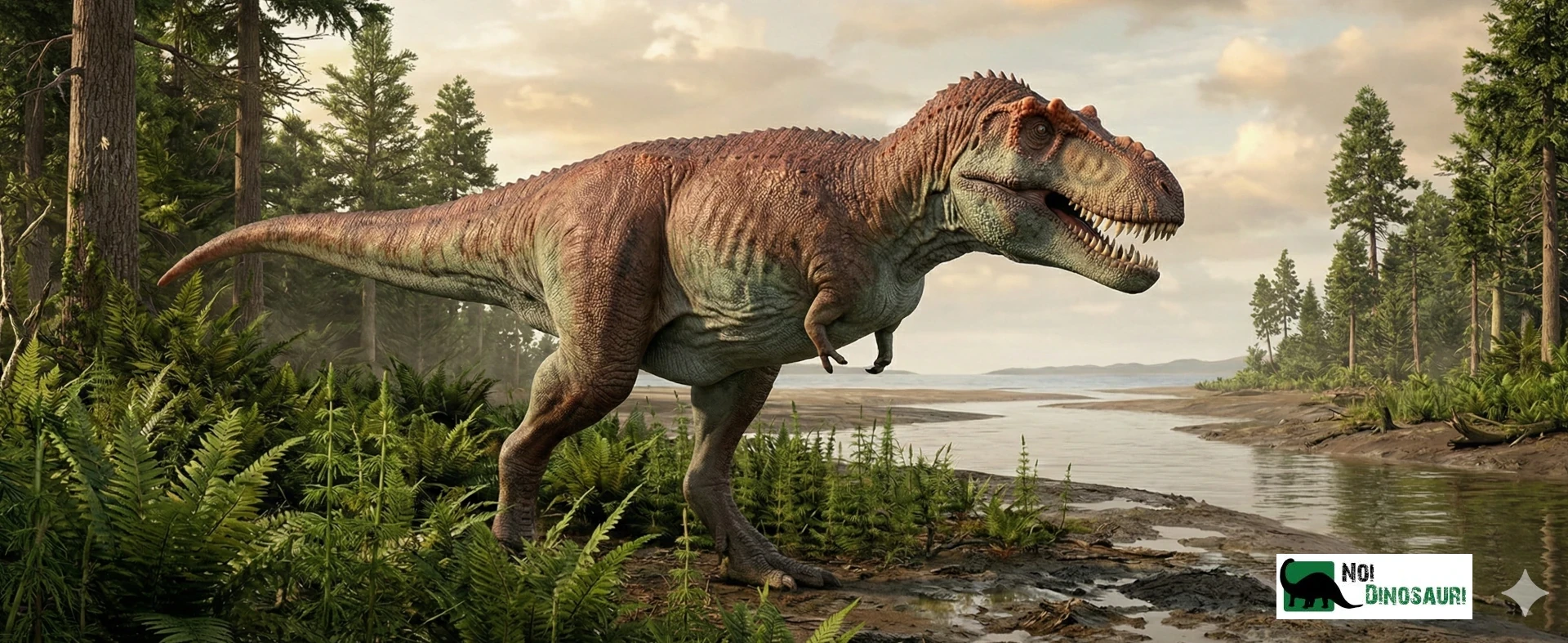
Albertosaurus
Albertosaurus sarcophagus dominated the Late Cretaceous as a fearsome member of the tyrannosaurid family. It ruled the North American ecosystems millions of years before its heavier cousin, Tyrannosaurus rex, even existed. As an apex bipedal predator, this remarkable theropod perfectly balanced the raw speed of its ancient ancestors with the devastating power seen in later tyrannosaurs.
Albertosaurus: History, Characteristics, and Facts
The first trace of this magnificent carnivore surfaced in 1884 when young geologist Joseph Burr Tyrrell unearthed a partial skull along Canada's Red Deer River. In 1905, legendary paleontologist Henry Fairfield Osborn officially named the creature Albertosaurus, meaning "Alberta Lizard," honoring the province where it was discovered. Today, the most complete and spectacular fossil specimens reside at the Royal Tyrrell Museum of Palaeontology in Drumheller and the American Museum of Natural History in New York. These ancient remains continue to captivate researchers and dedicated paleontology teams like Noi Dinosauri, standing as enduring testaments to the dinosaur's prehistoric supremacy.
Built for Speed
Forget the image of a slow, heavily armored tank. The Albertosaurus was a sleek, aerodynamic machine engineered for speed. While T. rex relied on brute force, this predator traded massive bulk for explosive agility. Measuring nine meters long and weighing as much as a medium commercial van, it was a terrifyingly efficient killer. Touching its flank would have felt like brushing against coarse industrial sandpaper. Rare fossilized skin impressions from North American tyrannosaurids reveal a dense network of polygonal scales. These scales effectively retained moisture and protected its tightly coiled muscles during the hunt. This theropod did not simply wear its prey down; it struck like a bullet.
Cranial Crests and Horn Sheaths
Two distinct keratinous display structures rose prominently above the predator's eyes. Below this crest sat a lethal jaw lined with over sixty curved, serrated teeth. These teeth acted like sharp steak knives, expertly designed to slice through flesh and pull it backward. This terrifying biological arsenal is grounded in hard evidence. Paleontologists confidently deduce the presence of a horn sheath from the rugose, porous texture of the cranial bones just above the orbit. This bone signature perfectly matches the soft tissue anchors found on the beaks of modern toucans or the casques of cassowaries. While artists often imagine these crests in vivid blood-red or orange, such colors remain speculative. Bone cannot preserve pigment, making this bright coloration a fascinating scientific hypothesis rather than a proven fact.
Pack Hunting Behavior
A single Albertosaurus packed incredible lethal force, but a hunting pack unleashed a Cretaceous apocalypse. They likely operated with the relentless, coordinated efficiency of modern wolves, leveraging a devastating tactical advantage: age and speed. The juvenile dinosaurs, light and fast as greyhounds, chased down agile prey and drove them directly into ambushes set by the adults. The older, slower members delivered the crushing power required to finish the kill. The famous Dry Island bonebed in Alberta provides the most compelling evidence for this pack behavior. Here, paleontologist Phil Currie excavated the remains of 26 individuals ranging from hatchlings to seniors. A catastrophic, sudden event buried this entire family group together, freezing a prehistoric gang in time.
Bite Force and Hunting Style
When an Albertosaurus clamped its jaws shut, prey had no escape. Unlike a T. rex, which pulverized bone, the Albertosaurus possessed a narrower jaw equipped with teeth built exclusively to slice. It struck its victims like an industrial hydraulic press fitted with razor blades, instantly severing vital muscles and triggering massive hemorrhaging. The fossil record provides direct, undeniable proof of this hunting style. Paleontologists have uncovered countless deeply scored bones from large herbivores, including duck-billed hadrosaurs. Precise laser measurements and silicone casts of these prehistoric wounds perfectly match the spacing and serration of Albertosaurus teeth. This predator profoundly shaped its ecosystem, violently tearing away massive chunks of meat with a single, powerful wrench of its neck.
Popular culture often lumps all tyrannosaurids together, inaccurately giving them the titanic, bulky proportions of a T. rex. However, paleontological data reveals a remarkably different reality. The Albertosaurus was significantly more gracile and slender than its relatives from the late Maastrichtian stage. It stretched roughly 9 to 10 meters from its snout to the tip of its tail, with an estimated weight hovering between 1.7 and 2.5 tons. These streamlined dimensions highlight an apex predator that prioritized lethal agility and speed over extreme muscle mass.
The Albertosaurus maintained a strictly carnivorous diet. It utilized its blistering top speed to ambush and take down both medium and large prey. This predator ruled the ancient, isolated subcontinent of Laramidia, a landmass bordered by the Western Interior Seaway that corresponds to the modern western coast of North America. Based on deposits from the Horseshoe Canyon Formation, its habitat featured a complex network of swamps, estuaries, and rich floodplains. Lush conifers, bald cypresses, cycads, and dense fern underbrush dominated the landscape. Within this vibrant ecosystem, the Albertosaurus actively hunted massive duck-billed dinosaurs like Edmontosaurus and Hypacrosaurus. It also shared its territory—and likely clashed—with heavily armored ceratopsids such as Pachyrhinosaurus, while swift, ostrich-like ornithomimids sprinted through the dense foliage.
Reproduction
Much of what we understand about Albertosaurus reproduction comes from comparing it with other well-documented tyrannosaurids, such as Tyrannosaurus and Daspletosaurus, alongside direct analysis of the Dry Island fossils. Females likely laid elongated eggs in semi-buried ground clutches, following the standard reproductive pattern of non-avian theropods. Their growth rate was staggeringly fast. Histological sections of their long bones show a massive, explosive growth spurt during adolescence. The dinosaur rapidly packed on most of its adult body mass within a few short years, after which its growth slowed drastically upon reaching sexual maturity. The incredible age diversity found within the Dry Island bonebed has allowed scientists to plot an exceptionally rare, nearly complete growth curve for the species. They likely reached sexual maturity between 12 and 16 years of age, with a maximum recorded lifespan of roughly 28 to 30 years.
The Extinction
The Albertosaurus vanished roughly 70 million years ago, straddling the Campanian and Maastrichtian stages. This localized extinction occurred millions of years before the infamous Cretaceous-Paleogene extinction event wiped out T. rex and the remaining non-avian dinosaurs. Therefore, an asteroid impact did not end the reign of the Albertosaurus. Instead, gradual environmental shifts across Laramidia slowly drove its decline. The expansive floodplains and swamps it once dominated underwent massive transformations, completely altering the established predator-prey dynamics. As the ecosystem changed, newer tyrannosaurid species better adapted to these harsh new conditions eventually replaced the Albertosaurus. This long, complex faunal turnover ultimately paved the way for the rise of its legendary descendant: the Tyrannosaurus rex.
Curiosity - Did you know?
What is the Dry Island bonebed and why is it important?
Discovered by paleontologist Barnum Brown in 1910 and thoroughly excavated by Dr. Philip J. Currie in the late 1990s, the Dry Island bonebed is a massive fossil site located in Alberta, Canada. It preserves the remains of 26 Albertosaurus individuals ranging from juveniles to elderly adults. This dense concentration makes it one of the richest tyrannosaurid bonebeds ever found. Dr. Currie's modern taphonomic and histological analyses of the site provided groundbreaking, definitive evidence regarding the pack hunting behavior and rapid growth rates of these incredible apex predators.