Pterodactylus

Paleontology's Most Famous Misunderstanding and the Pioneer of the Jurassic Skies

Pterodactylus is not a dinosaur. It is a prehistoric flying reptile belonging to the pterosaur order. Gliding through the Late Jurassic period, it dominated the tropical skies of modern-day Europe. It was the first pterosaur ever identified by science. Because of this, its name morphed into a colloquial umbrella term. The public incorrectly uses "pterodactyl" to describe any winged prehistoric reptile. Science is far more precise. The name identifies a specific, surprisingly diminutive genus of pterodactyloid.

Scientific name
Pterodactylus
Diet

Pterodactylus: Curriculum Vitae of the species

History and Discovery

The discovery of Pterodactylus marks ground zero for the study of flying reptiles. It was the absolute first of its kind presented to the scientific community.

The first fossil surfaced in 1784. Italian scientist Cosimo Alessandro Collini described it, but the anatomy baffled him. He hypothesized a bizarre marine animal. The enigma held until 1809. Renowned French naturalist Georges Cuvier cracked the code. He coined the name Ptéro-Dactyle (from the Greek pteron, wing, and daktylos, finger). Cuvier correctly deduced that the hyper-elongated digit anchored a wing membrane. Today, spectacular specimens extracted from the lithographic limestones of Solnhofen, Germany, sit in prestigious institutions. The Bavarian State Collection for Paleontology and Geology in Munich and the Natural History Museum in London display these fossils. There, researchers map every microscopic detail of its biomechanics.

Anatomy and characteristics

Forget the cinematic monsters covered in scaly leather. The anatomy of Pterodactylus reveals an exceptionally adapted aerial predator.

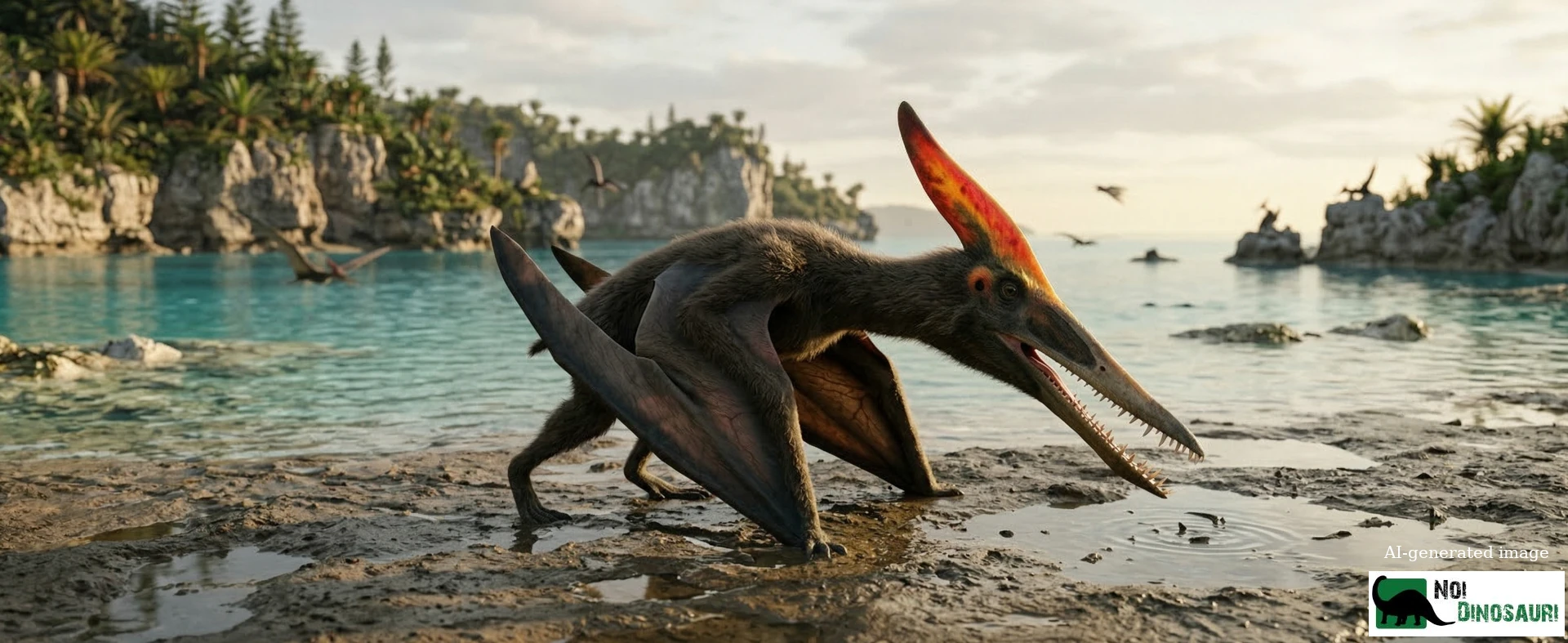
It possessed a long, narrow skull ending in a straight, pointed beak. Its jaws housed roughly 90 small, conical teeth. They were longer at the front, progressively shortening toward the back. A perfect structural trap for snatching fish and small invertebrates. It possessed highly developed optic lobes. This granted it acute vision, essential for spotting moving prey while gliding low over shallow waters.

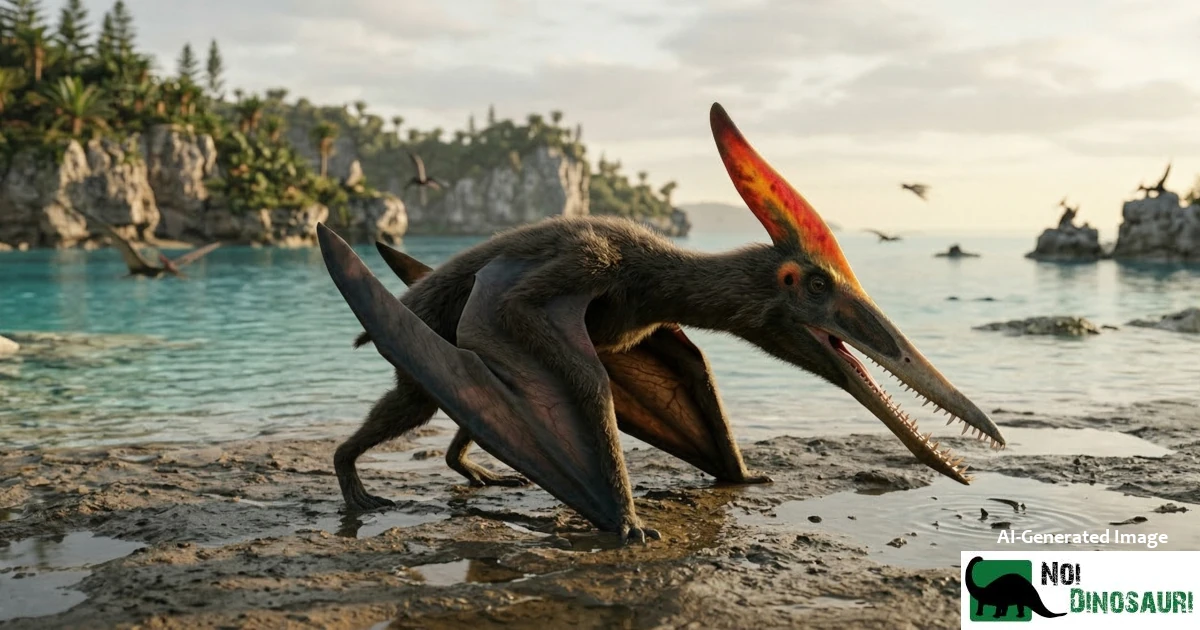
For decades, paleontologists assumed it lacked a crest. Ultraviolet light analysis on fossils shattered that assumption. Adults grew a soft-tissue crest made of keratin. Starting from the nape and extending backward, this structure rarely fossilized. It was likely the animal's strongest visual feature, used for courtship or species recognition. It may have displayed vibrant pigments like red, yellow, or orange, contrasting sharply against the body's muted tones.

The wings lacked feathers. They formed a complex, thick membrane called a patagium. This leathery structure was interwoven with blood vessels, a muscle layer, and a network of stiff fibers known as actinofibrils. These fibers kept the wing taut and aerodynamic. The membranes utilized countershading. Darker on top to blend with the ground below; lighter underneath to vanish against the bright sky above. Unlike its Triassic predecessors, Pterodactylus was almost entirely tailless.

It did not have naked reptilian skin. Its body retained heat through a dense coat of filamentous pycnofibers. This fuzz structurally differs from mammalian hair but served the same thermoregulatory function. A clear indicator of endothermy (warm-bloodedness). Melanosome analysis detects melanin-based colors. Shades of brown, reddish, or dark gray provided camouflage while absorbing the sun's heat.

Actual Size (Myth vs. Reality)

The word "pterodactyl" usually conjures images of colossal shadows spanning meters across. This is a massive misunderstanding. The public confuses it with Late Cretaceous giants like Pteranodon or Quetzalcoatlus. Osteological data tells a completely different story.

In the Late Jurassic, Pterodactylus antiquus was remarkably small. A fully developed adult reached a maximum wingspan of 1.04 meters. The exact wingspan of a modern falcon or a large seagull. Its skeletal structure was optimized to shed flight weight. The most accurate estimates place its mass at a mere 1 to 2 kilograms. The numerous smaller fossil specimens found—often the size of blackbirds—are not dwarf species. They are juveniles. This proves these reptiles lacked prolonged parental care. They took to the skies from a very young age.

Diet and Paleoecology

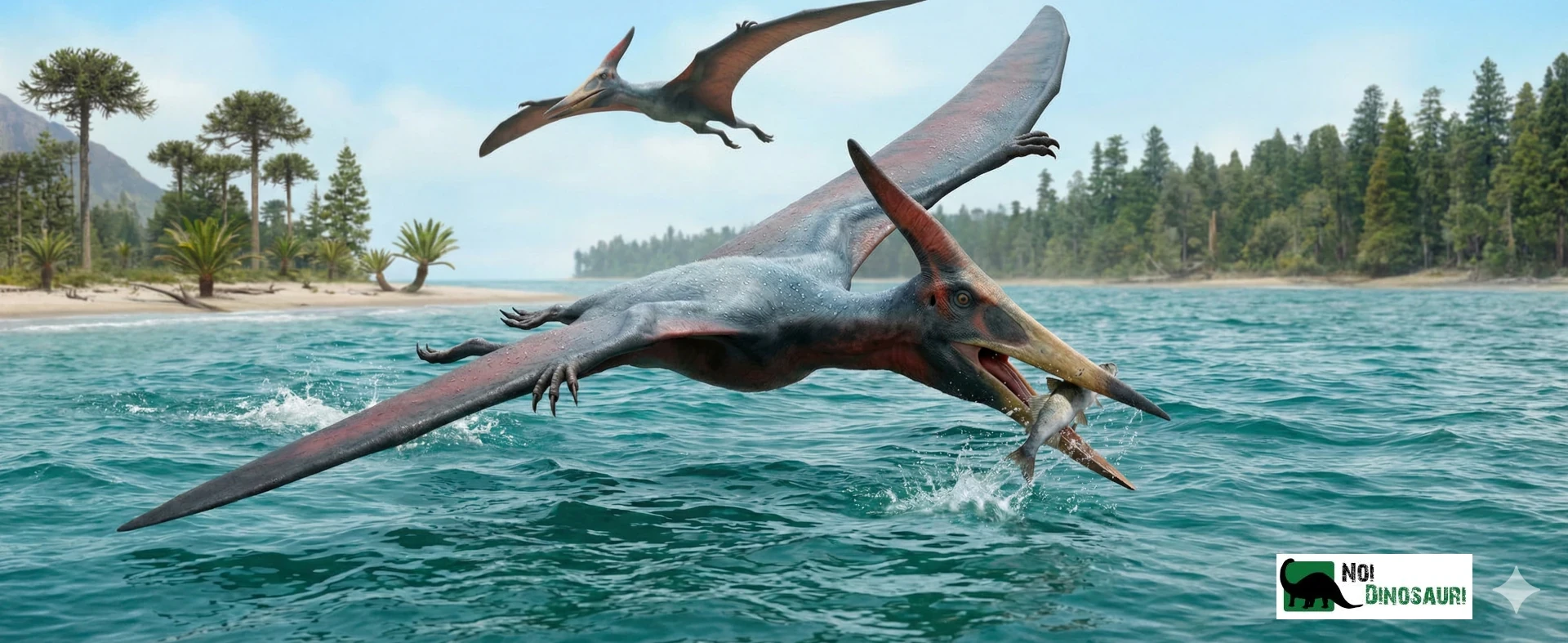
Modern-day inland Bavaria hides a past as a tropical archipelago, bathed by the warm waters of the Tethys Sea. Here, Pterodactylus operated as an opportunistic piscivore. It patrolled placid coral lagoons. It caught small fish and surfacing invertebrates using its toothed beak like forceps, avoiding deep dives.

These islands sat on the European margin of the Laurasian supercontinent. The climate was arid or semi-arid. The terrestrial flora clinging to the lagoon coasts featured hardy conifers, seed ferns, and low-growing cycads—vegetation evolved to retain moisture. The ecosystem demanded instant reflexes. Pterodactylus shared the airspace with the long-tailed pterosaur Rhamphorhynchus and the famous feathered dinosaur Archaeopteryx. On the ground, it had to launch into the air rapidly to evade agile terrestrial predators like the small theropod Compsognathus.

Curiosity - Did you know?

The original fossil studied in 1784 sparked an academic short circuit. Scientist Johann Hermann proposed an extreme classification. He hypothesized the animal was an evolutionary chimera: a missing link between a bird and a mammal. He correctly deduced that the elongated fingers supported a membranous wing, but went too far. He drafted an anatomical reconstruction endowing the Pterodactylus with mammalian external genitalia. It took Cuvier's strict anatomical rigor to wipe out this hypothesis and permanently anchor this pioneer of flight to the reptile class.