
 IT
IT  DE
DE  FR
FR  ES
ES  PT
PT 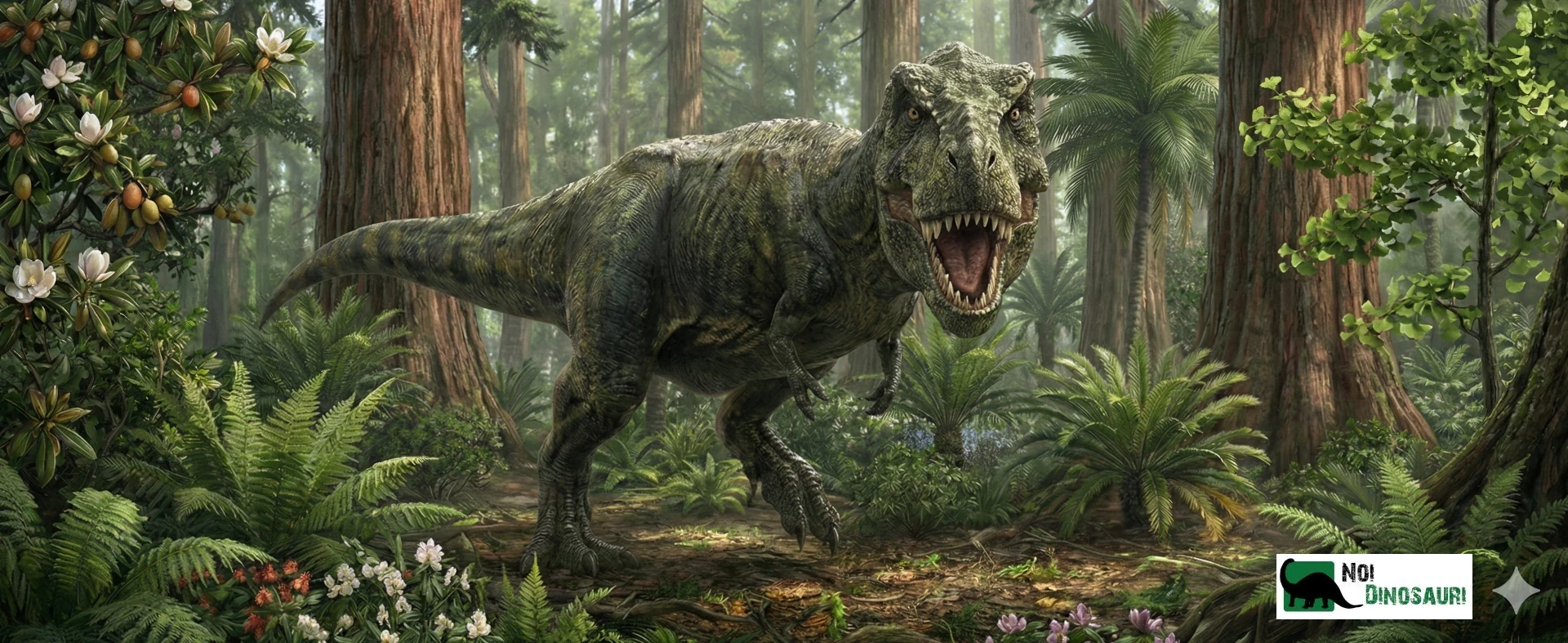
Tyrannosaurus rex
The Tyrannosaurus rex is the apex terrestrial carnivore. A theropod dinosaur of the Tyrannosauridae family. It dominated the landscapes of North America during the Maastrichtian, the terminal phase of the Late Cretaceous (between 68 and 66 million years ago). Its evolutionary lineage was cut short abruptly. Erased forever by the Mesozoic mass extinction.
Tyrannosaurus rex: History, Characteristics, and Facts
Montana, 1902. Fossil hunter Barnum Brown extracts the first partial skeleton. In 1905, paleontologist Henry Fairfield Osborn classifies the animal and coins its scientific name: "Tyrant Lizard King." The following decades delivered crucial fossils to science. "Sue" (FMNH PR 2081) stands out. Discovered in 1990 in South Dakota, it represents the most complete skeleton in the world. Today, it is proudly exhibited at the Field Museum of Natural History in Chicago. The fossil record holds other giants. "Stan" and "Scotty." The latter ranks among the most massive individuals ever documented by paleontology.
The anatomy of the Tyrannosaurus describes a biological machine calibrated for lethal trauma. A bipedal colossus. Unlike archaic predators, it abandoned the use of long forelimbs for capture, concentrating its offensive power in a massive skull, up to 1.5 meters long. The oral apparatus featured 60 serrated teeth. The largest reached 30 centimeters in length, root included. The posterior region of the skull expanded to anchor hypertrophic jaw muscles. A bite structured to crush flesh and shatter bone (osteophagy).
The forelimbs measured barely one meter. They ended in just two clawed digits. An apparent disproportion disproved by bone analysis: they were short, but possessed incredibly dense musculature. Their exact mechanical function remains a subject of lively debate.
The weight load rested on formidable hind legs. Load-bearing columns capable of vast strides. The maximum speed, calculated between 20 and 27 km/h, frames it as an ambush hunter. Explosive short-distance sprints. No high-speed pursuits. The tail acted as a structural counterweight. A rigid, long, and heavy pendulum, essential to compensate for the mass of the massive head and torso, preventing the titan from toppling forward.
Its senses operated at the limit of biological efficiency. Forward-facing orbits guaranteed binocular vision superior to modern hawks. Depth calculation with zero margin of error. Vast olfactory bulbs processed chemical trails from miles away. It located live prey or carcasses with extreme precision.
Fossil impressions of adult specimens show a hide covered in horny scales. Modern phylogeny suggests, however, the presence of sparse, filamentous fuzz on the backs of juveniles. An evolutionary remnant of its feathered ancestors, destined to disappear with growth.
3D biomechanical models dismantle the twenty-meter-tall cinematic monsters. Osteological data set precise limits. An adult reached a maximum length of 12 to 12.4 meters. Hip height, the highest point in a natural horizontal posture, measured between 3.6 and 4 meters. Body volume approached 8 to 9 tons. A mass that biomechanically prevented the airborne phase typical of true running. The T. rex marched. A fast, inexorable pace, limited to 20–25 km/h to avoid fracturing its own leg bones under its crushing weight.
Diet and Paleoecology: Its lost world
The superpredator hunted in Laramidia, an island continent corresponding to the modern western North American coast, isolated by the Western Interior Seaway. An ecosystem of floodplains, swamps, and humid subtropical forests. Under the shade of sequoias, towering conifers, and ferns, the first angiosperms (flowering plants) began to diversify.
An ambush predator and opportunistic scavenger. The primary targets were heavily armored herbivores: the ceratopsid Triceratops and the gigantic hadrosaurid Edmontosaurus. Its territorial domain intersected with the dromaeosaurid Dakotaraptor, the armored Ankylosaurus, and the colossal pterosaur Quetzalcoatlus.
Taphonomy records direct contacts and brutal physical clashes:
- A Triceratops skull shows a snapped brow horn and deep puncture wounds on the bony frill. The fossil exhibits clear bone regrowth. The herbivore survived the assault. The dimensions of the punctures match the Tyrannosaurus's teeth to the millimeter.
- Embedded teeth. T. rex teeth frequently emerge scattered among ceratopsid bones. The immense pressure of the bite fractured the aggressor's dentition, leaving splinters lodged in the carcass during a struggle or feeding frenzy.
- Triceratops fossils reveal deep gouges and drag marks on the cervical vertebrae, just below the bony frill. The predator clamped its jaws on the frill and pulled with brutal force, decapitating the herbivore to access the nutrient-rich neck muscles.
Coprolites (fossilized feces) attributed to large theropods contain pulverized bone fragments belonging to ceratopsids.
The T. rex holds the record for jaw power among all known terrestrial animals. Biomechanical simulations indicate an impact pressure between 35,000 and 57,000 Newtons. With every bite, the teeth penetrated muscle and literally exploded the bone. An extreme osteophagy. This mechanism allowed the Tyrannosaurus to extract highly nutritious bone marrow—a caloric resource inaccessible to any other carnivore of the time.