
 IT
IT  DE
DE  FR
FR  ES
ES  PT
PT 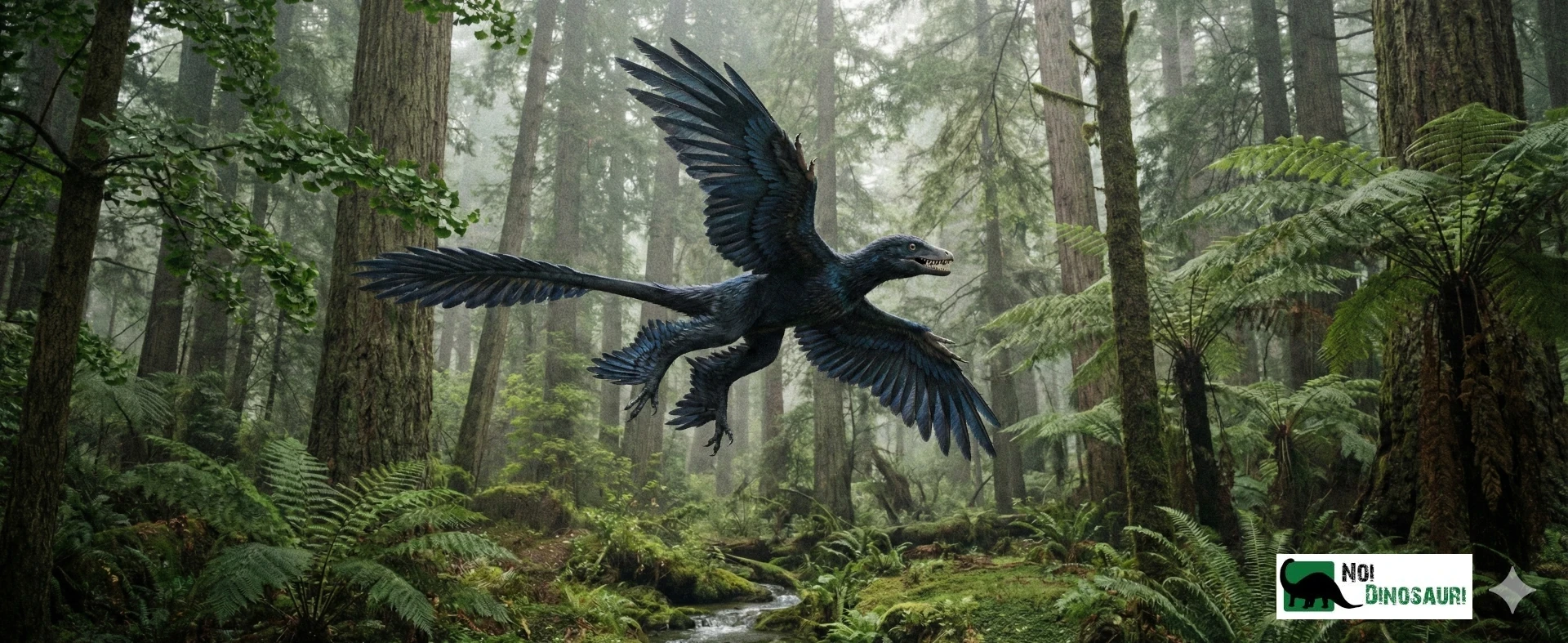
Microraptor
Microraptor was a small but formidable non-avian theropod, famous worldwide for its extraordinary four-winged anatomy. Belonging to the Dromaeosauridae family—the same group as the iconic Velociraptor—this arboreal predator lived during the Early Cretaceous period, roughly 120 million years ago. As a highly specialized carnivorous dinosaur, it remains one of the most crucial transitional fossils ever discovered, bridging the evolutionary gap between ground-dwelling theropods and modern birds.
Microraptor: History, Characteristics, and Facts
The discovery of Microraptor forever changed paleontology and our understanding of how flight evolved. The renowned Chinese paleontologist Xu Xing named the genus—which translates from Greek and Latin as "small thief"—in the year 2000.
Researchers unearthed the very first astonishing fossil remains from China's prolific Jiufotang Formation in Liaoning Province. These fossils were exceptionally well-preserved, showcasing clear, detailed plumage imprints. Today, the most spectacular and complete holotypes—including Microraptor zhaoianus and Microraptor gui—reside at the authoritative Institute of Vertebrate Paleontology and Paleoanthropology (IVPP) in Beijing, where they continue to drive advanced evolutionary studies.
The Feathered Biplane of the Mesozoic Era
Picture four wings, rather than two, silhouetted against the Cretaceous sky. Microraptor was the prehistoric equivalent of a reconnaissance drone: compact, lethal, and scarcely larger than a modern crow. Forget the drab, scaly monsters of classic cinema; this pocket-sized predator was a visual marvel.
In 2012, an international team examined fossilized remains under a scanning electron microscope and identified perfectly preserved melanosomes (pigment cells). Their distinct sausage-like shape perfectly matches those found in modern iridescent birds. This discovery revealed an assassin draped in deep, glossy black with shifting violet, blue, and green reflections—much like an oil slick on wet asphalt. To the touch, its feathers would have felt smooth and silky, flashing metallic hues that changed with the light.
Aeronautical Engineering and Switchblade Claws
Nature built its hind legs for dominating the air, not for running. Long flight feathers (remiges) sprouted directly from its calves and feet, effectively transforming this theropod into a living biplane. At the end of each limb lay its primary weaponry: sharp, curved claws. The most prominent of these was the lethal sickle claw on the second toe, a hallmark weapon of all dromaeosaurids.
The exact mechanics of its flight puzzled scientists for years. Finally, biomechanical engineers placed a 3D model of the dinosaur inside a wind tunnel. These tests proved that Microraptor did not actively flap its hind wings. Instead, it used them as aerodynamic stabilizers. This clever adaptation allowed it to glide silently from branch to branch, dropping onto unsuspecting prey without making a sound.
Death from Above: The Diet of the Pocket Assassin
When this hunter descended, it struck with the precision of a diving falcon. Its highly varied diet left no room for picky eating: it consumed small mammals, armored insects, and even fish. It locked onto its target using its powerful clawed feet and finished the job with finely serrated, hook-like teeth designed to grip slippery bodies. It often swallowed its meals whole, much like a modern pelican.
The exceptional preservation at the Jiufotang quarries has yielded Microraptor skeletons with their last meals still petrified in their stomachs. In one famous specimen, paleontologists successfully extracted the entire foot of a primitive mammal, swallowed bone and all just hours before the dinosaur died.
Discarded Evolution: An Extreme Prototype
Possessing four wings offered an unparalleled tactical advantage in the canopy, but it made ground takeoffs an absolute disaster. The long feathers on its hind legs made walking incredibly clumsy—imagine trying to sprint wearing scuba flippers. Microraptor was a radical evolutionary experiment, an extreme prototype quickly outpaced by more versatile biological designs.
By comparing its skeleton to those of early fossil birds, scientists mapped how natural selection progressively reduced these hind feathers over millions of years. The feathered biplane eventually gave way to the monoplane design, vanishing into the mists of the Cretaceous to leave legs free for running toward the future.
Pop culture often inflates carnivorous dinosaurs into unstoppable, towering monsters, but Microraptor actually ranks among the smallest theropods ever discovered. Including its long, slender feathered tail, its total length averaged just 80 to 90 centimeters (about 31–35 inches).
It weighed an incredibly light 1 to 1.5 kilograms—an absolute necessity for gliding flight. We must completely debunk the myth of the massive dromaeosaurid here: this dinosaur was an elegant, lightweight creature perfectly engineered by nature to navigate the high forest canopy.
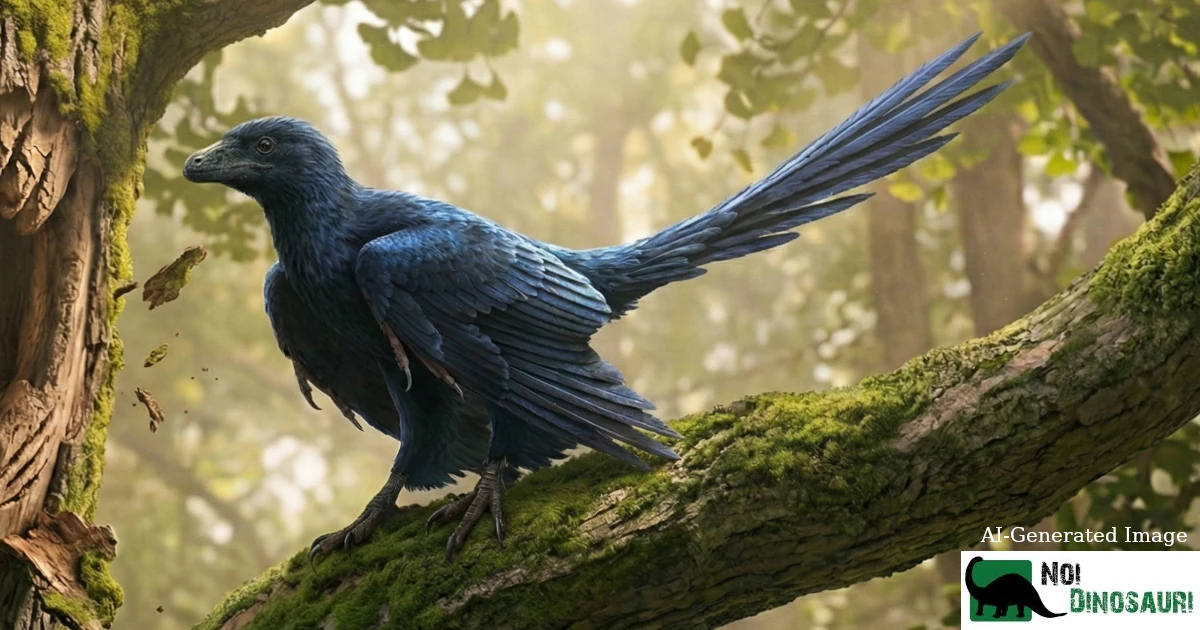
Microraptor was a ruthless and highly opportunistic ambush predator. It dominated the eastern reaches of Laurasia (the ancient northern supercontinent) in what is now modern-day China.
Its lush habitat, part of the famous Jehol Biota, featured humid temperate forests dotted with vast, deep volcanic lakes. Giant conifers, ancient Ginkgo trees, and a rich undergrowth of tree ferns created the perfect vertical environment for its sweeping glides. Among these dense branches, it shared its ecological niche with other incredible feathered dinosaurs like Sinornithosaurus, small herbivores such as Psittacosaurus, and early birds already capable of true flight, like Confuciusornis.
Curiosity - Did you know?
Despite sporting four wings, Microraptor could not lift off from the ground using powered flight like modern birds. Advanced wind tunnel tests and biomechanical models show its shoulder joints simply couldn't achieve the wide upward stroke needed for effective flapping. Instead, it launched itself from the tallest trees like a modern flying squirrel. By deploying its front and hind limbs, it created a complex, staggered biplane airfoil, allowing it to parachute, glide considerable distances, and steer using micro-adjustments of its legs.