Giganotosaurus carolinii
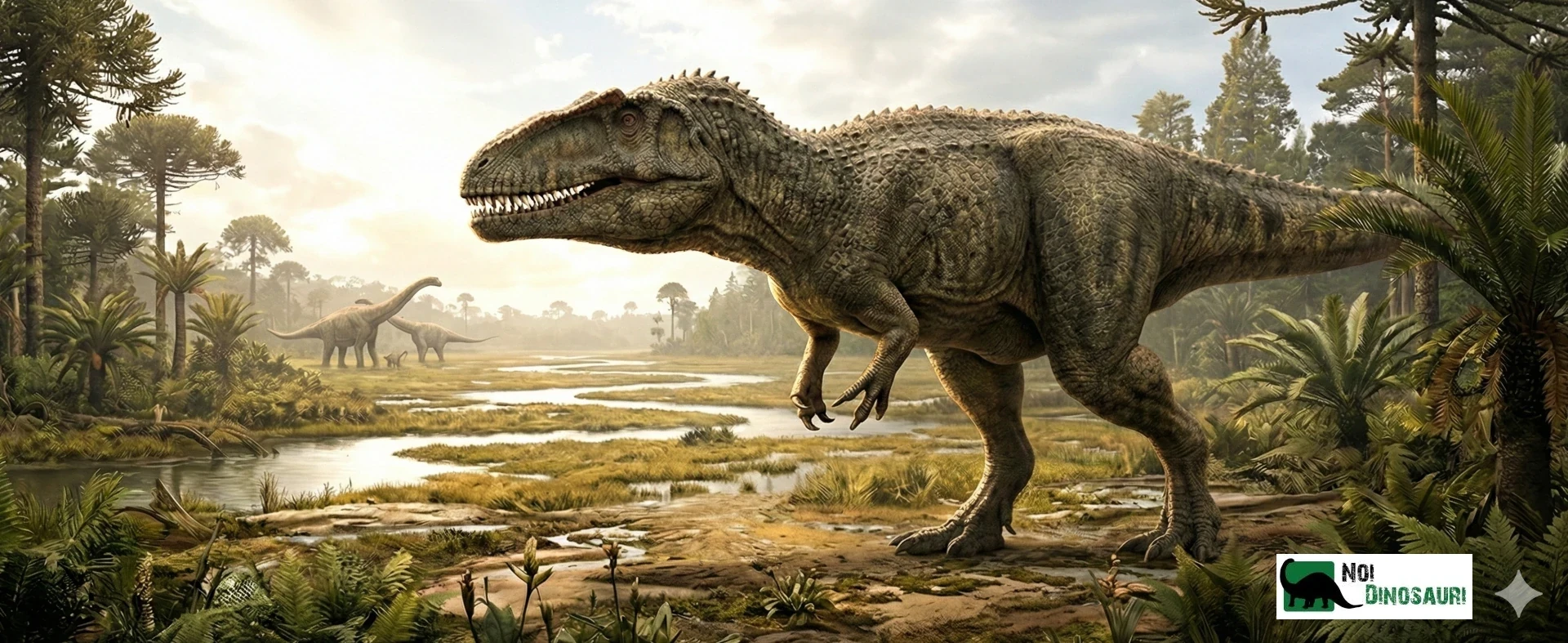
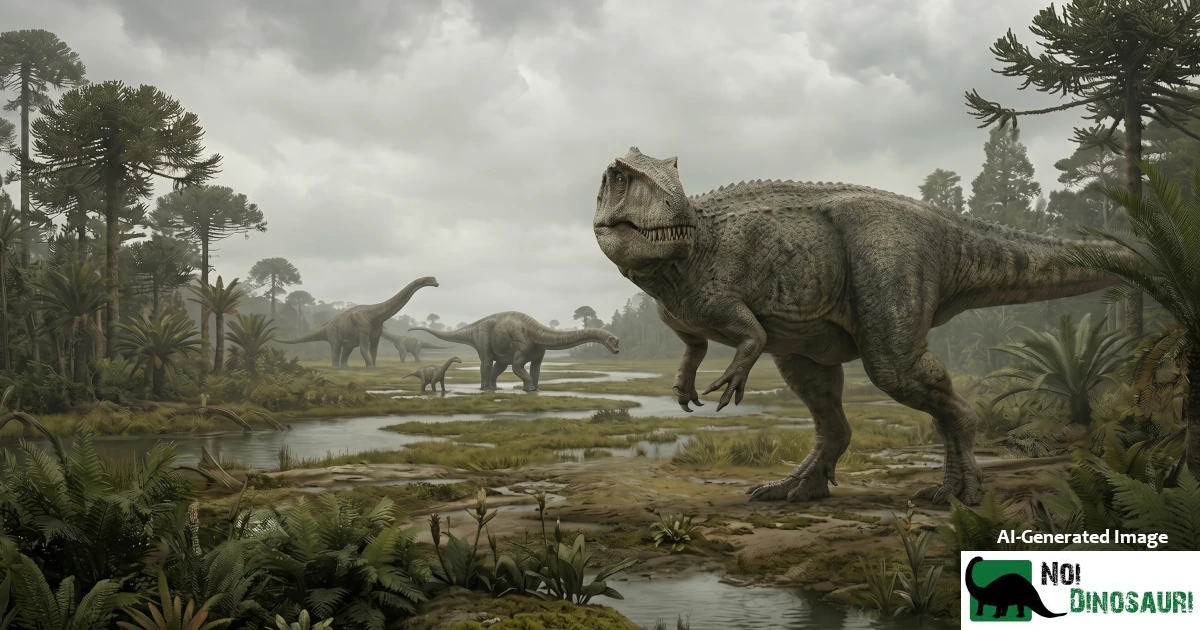
Giganotosaurus was a colossal terrestrial predator belonging to the Carcharodontosauridae family of theropod dinosaurs. This apex predator ruled South America during the Late Cretaceous, specifically the Cenomanian age (99.6 to 97 million years ago). Pop culture frequently misrepresents this incredible animal. However, the real Giganotosaurus was in a league of its own. It was a biological machine perfectly evolved to take down some of the largest prey ever to walk the Earth.
Giganotosaurus carolinii: Curriculum Vitae of the species
History and Discovery
The discovery of Giganotosaurus remains a thrilling milestone in South American paleontology. In 1993, amateur fossil hunter Rubén Darío Carolini found a series of massive bones protruding from the arid badlands of Argentina's Candeleros Formation. Paleontologists Rodolfo Coria and Leonardo Salgado formally described the species in 1995. They named it Giganotosaurus carolinii, which translates from Greek as "Carolini's giant southern lizard."
Today, the holotype (MUCPv-Ch1) is housed at the Ernesto Bachmann Paleontological Museum in Villa El Chocón, Argentina — roughly 70% complete and one of the most significant theropod specimens ever recovered in South America.
Anatomy and characteristics
Giganotosaurus was a surgical assassin. It stretched as long as a standard city bus and weighed as much as one and a half African elephants.
The Shadow Over Patagonia: Blades Instead of Hammers
This predator didn't crush its prey; it sliced them. Its jaws held dozens of curved, serrated teeth designed to inflict catastrophic soft tissue damage. Analysis of the titan's femur and skull reveals a surprisingly lightweight bone architecture. Furthermore, microscopic striations on the fossilized enamel show a distinct pull-and-slice motion. The jaw snapped shut and pulled back, tearing flesh effortlessly without seeking destructive impact against bone.
Living Armor: Built for Terror
Its skin formed an impregnable mosaic of tuberculated scales. These were thick, rigid, and punctuated by bony ridges along the spine. While direct fossilization of its epidermis is incomplete, paleontologists look to mummified skin impressions from its close carcharodontosaurid relatives. These fossils show a featherless body dominated by rosette structures. This texture shielded the predator from scratches and helped dissipate the intense Cretaceous heat. It likely sported dusty slate and olive tones, blending seamlessly into South America's conifer forests.
The Onboard Computer: A Chemical Radar
The skull of Giganotosaurus was as large as a bathtub, yet its brain was roughly the size of a banana. It operated on pure instinct and a highly advanced olfactory system. Recent micro-CT scans of the fossilized braincase generated an endocast (a 3D brain map). This revealed massive olfactory lobes paired with tiny cerebral hemispheres for vision. This carnivore smelled its environment long before seeing it. It could track blood from miles away, navigating the wind like a shark tracking blood in open water.
The Art of Hemorrhage: Taking Down Titans
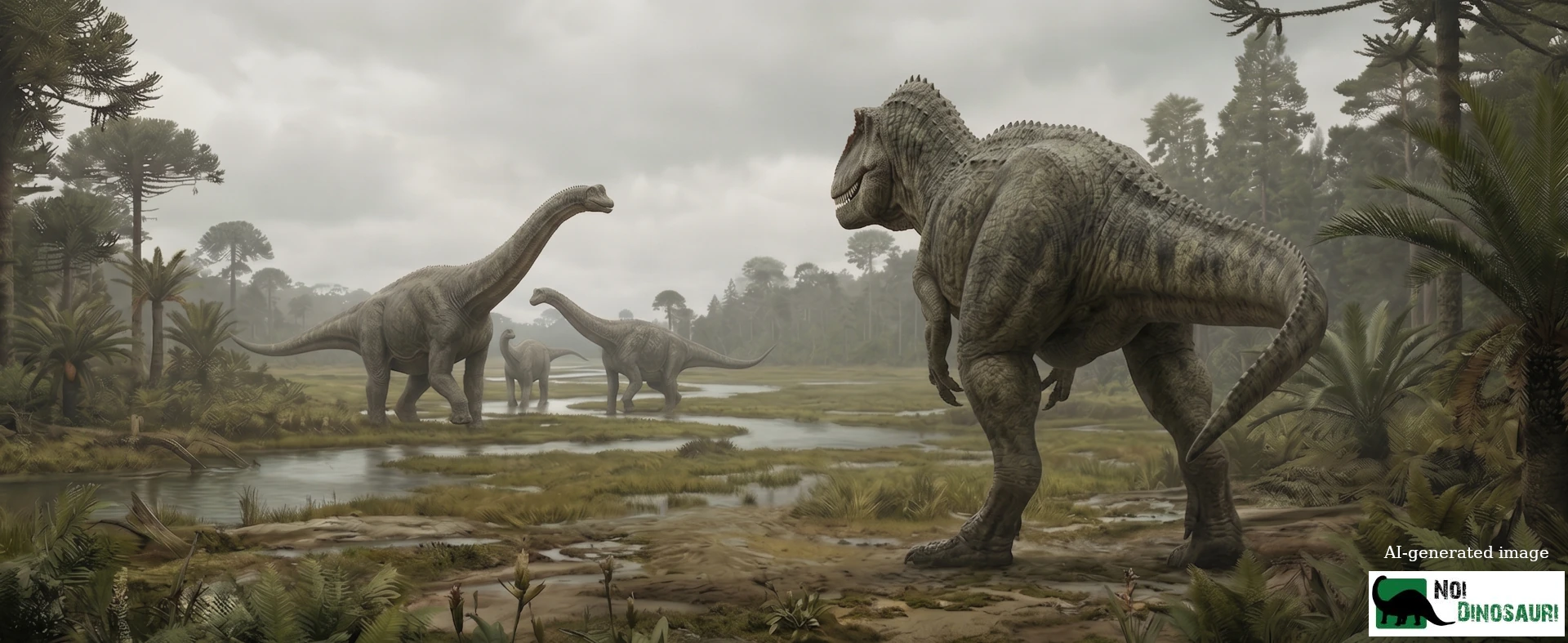
Giganotosaurus avoided direct brawling. Instead, it relied on a calculated bite-and-bleed tactic. It dashed in, sank its blade-like teeth into the prey, and rapidly retreated. Then, it waited in the shadows for massive blood loss to incapacitate the giant. Fossil evidence firmly supports this attrition strategy. In Argentine excavation sites, paleontologists frequently find shed Giganotosaurus teeth near the bones of colossal sauropods like Andesaurus. Because the tooth roots show no bone-crushing trauma, this prehistoric crime scene confirms a tear-and-release hunting style.
Actual Size (Myth vs. Reality)
Media and entertainment heavily distort the true size of Giganotosaurus. Franchises like Jurassic World portray it as a leviathan that dwarfs Tyrannosaurus rex. Fossil data, however, reveals a story of substantial parity. The holotype measures roughly 12 to 12.5 meters in length, making it only slightly longer than an average T. rex.
Recent biometric models and 2024 scientific debates have actually reduced the original mass estimates. We now know this carnivore weighed between 6.5 and 8 tons. It was a slender, agile killer rather than a bulky bruiser.
Diet and Paleoecology
Giganotosaurus fed almost exclusively on the massive herds of herbivorous dinosaurs roaming ancient Patagonia. It was the unquestioned apex predator of Gondwana, the southern supercontinent. Its environment featured broad floodplains and mighty rivers subjected to harsh, dry seasons. Lush gymnosperm forests dominated the landscape alongside ferns, cycads, and early angiosperms (flowering plants).
Within this vibrant ecosystem, Giganotosaurus hunted titans like Andesaurus and the sail-backed Limaysaurus. It shared the forest floor with smaller, agile predators such as the dromaeosaurid Buitreraptor, ancient terrestrial crocodiles, and Najash—an early snake that still possessed functional hind legs.
Curiosity - Did you know?
The biomechanics of a Giganotosaurus bite are truly fascinating. Despite having a noticeably larger skull than T. rex, its actual bite force was significantly lower. Finite Element Analysis (FEA) applied to its jaw shows that the skull handled torsional stress exceptionally well. This allowed it to safely slice flesh while prey thrashed and struggled. However, the skull was not built for extreme vertical pressure. While T. rex generated over 35,000 Newtons to pulverize bones, Giganotosaurus used a high-speed "scissor" effect. It inflicted catastrophic, deep lacerations without ever risking damage against the victim's skeleton.
It was slightly longer (around 12 to 12.5 meters), but it was less bulky and lighter than a fully grown T. rex, weighing between 6.5 and 8 tons.
IT
DE
FR
ES
PT