
 IT
IT  DE
DE  FR
FR  ES
ES  PT
PT 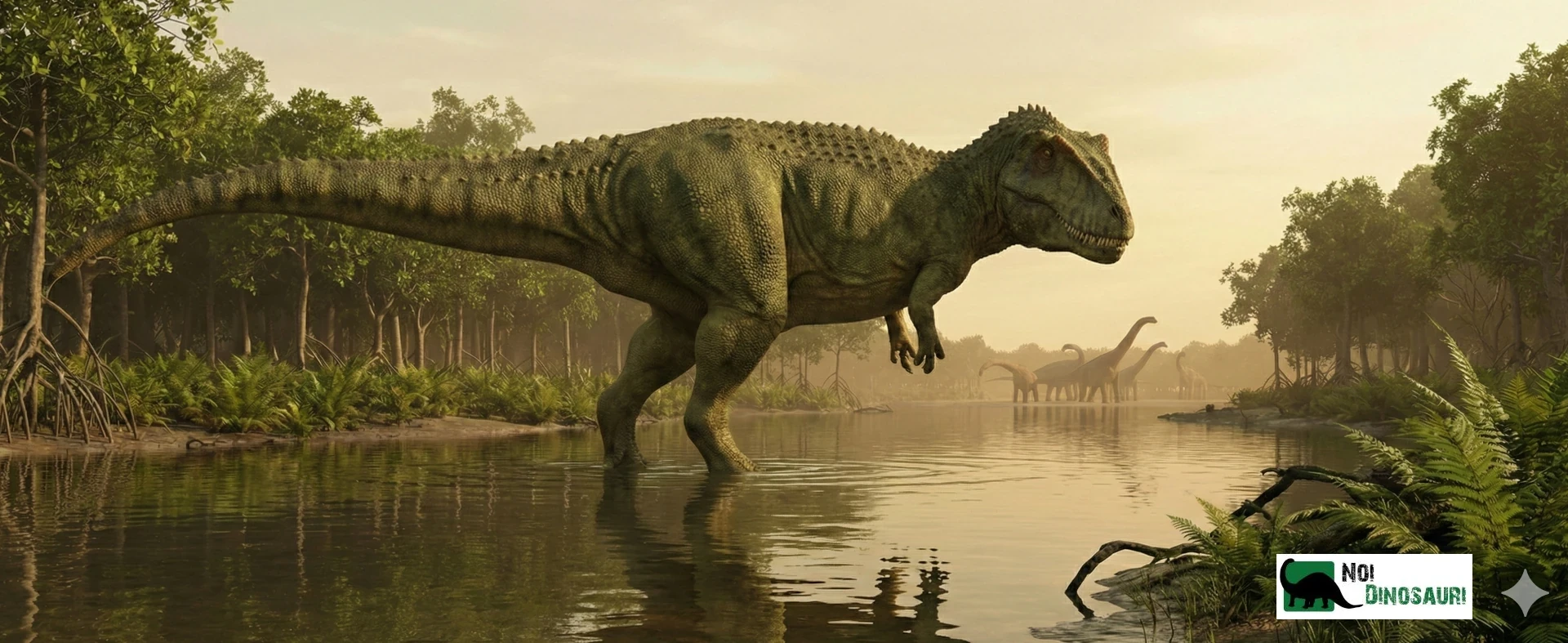
Carcharodontosaurus
Carcharodontosaurus stood as one of the most formidable and imposing carnivorous theropod dinosaurs to ever walk the earth, the undisputed apex predator of African terrestrial ecosystems during the Late Cretaceous. As a specialized member of the Carcharodontosauridae family — a lineage of giant allosauroids — this massive carnivore represented the peak of predatory evolution on the southern supercontinent. It boasted a lethal arsenal designed not to crush bone, but to efficiently slice through the flesh of colossal prey.
Carcharodontosaurus: History, Characteristics, and Facts
The paleontological history of Carcharodontosaurus is fascinating, yet marred by dramatic losses. Charles Depéret and Justin Savornin discovered the very first fossil fragments in Algeria, initially mistaking them for Megalosaurus. However, paleontologist Ernst Stromer coined the definitive name in 1931 after studying more complete remains excavated in Egypt. The genus name translates literally from Greek to "shark-toothed lizard" — honoring its incredible dental morphology and nodding to Carcharodon, the great white shark genus.
Tragically, Stromer's original holotypes were destroyed in 1944 during the Allied bombing of Munich. For over half a century, this apex predator existed only as a shadow in old pencil sketches. The genus finally rose from the ashes in 1995, when a team led by Paul Sereno braved the scorching cliffs of the Moroccan Sahara to unearth a massive, nearly complete skull within the Kem Kem Group. By analyzing the proportions of this titanic relic, scientists could finally recalculate the animal's true bulk — confirming that Africa hosted a carnivore capable of rivaling the size of North America's tyrant lizard king.
A Nightmare Armed with Serrated Blades
Picture a biological guillotine lined with the teeth of a great white shark. Carcharodontosaurus was a predator the length of a city bus and as heavy as a tracked tractor, engineered for one brutal purpose: inducing rapid, lethal hemorrhage. Its teeth, reaching up to 20 centimeters long, were not built to crush bone like those of Tyrannosaurus rex. Instead, they were sharpened on both edges like giant steak knives — grazing their rippled margins would slice through skin without the slightest resistance. Electron microscope analysis of these fossil teeth suggests the presence of vertical micro-scratches and parallel striations: the unmistakable signature of a clean, pulling slice, a stark contrast to the heavy wear marks left by bone-crushing predators.
Engineered for the Apocalypse
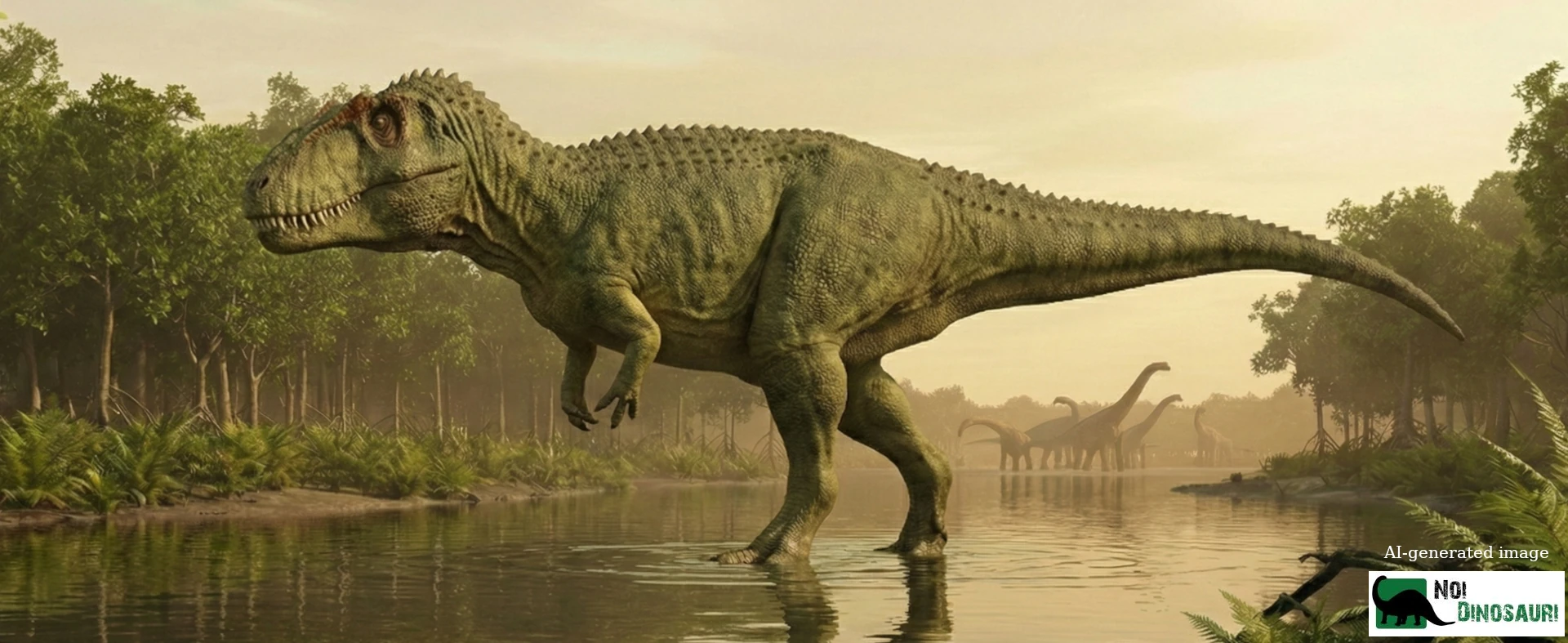
Its massive head was nearly the length of a standard bathtub. The snout likely featured a rough, leathery surface akin to modern crocodilians, thick enough to withstand the desperate scratches of struggling prey. Along its back and around its eyes, it may have displayed brightly colored scales — perhaps rust red or ochre yellow — to intimidate rivals under the punishing Cretaceous sun.
But its true tactical advantage remained invisible. This dinosaur operated as a living seismograph: long before spotting a herd of herbivores on the horizon, it could detect the dull, rhythmic thud of their footsteps vibrating through the ground — like feeling a train pass through your chest. Recent CT scans of its fossilized braincase seem to indicate auditory canals adapted for detecting low-frequency sounds, suggesting it could literally "feel" the tremors of a moving herd from miles away, well before making visual contact.
The Surgeon of Blood Loss
Carcharodontosaurus did not kill by crushing — it killed by slicing. It confronted herbivorous titans with a clinical, hit-and-run approach: lunging forward, opening its massive jaws, and driving a powerful downward whipping strike with its neck muscles, tearing away dozens of kilograms of flesh in seconds before immediately retreating — leaving its prey to collapse, exhausted and drained of blood. A ruthless hunt of attrition, precise and surgical.
The dimensions of Carcharodontosaurus are frequently exaggerated in popular culture, sparking heated debate among enthusiasts. We can firmly debunk the myth that it exceeded 14 or 15 meters in length: updated biometric data based on the proportions of the Moroccan neotype indicates that adult specimens reached a maximum length of 12 to 12.5 meters. To put that into concrete perspective, a single detail says it all: the neotype skull alone exceeds 1.6 meters in length — as tall as your front door.
When it comes to mass, modern 3D volumetric models suggest an estimated weight of 6 to 8 tons. While potentially longer than many Tyrannosaurus rex specimens, Carcharodontosaurus featured a much more gracile, slender build — making it a hunter defined by agility and jaw span rather than brute crushing force.
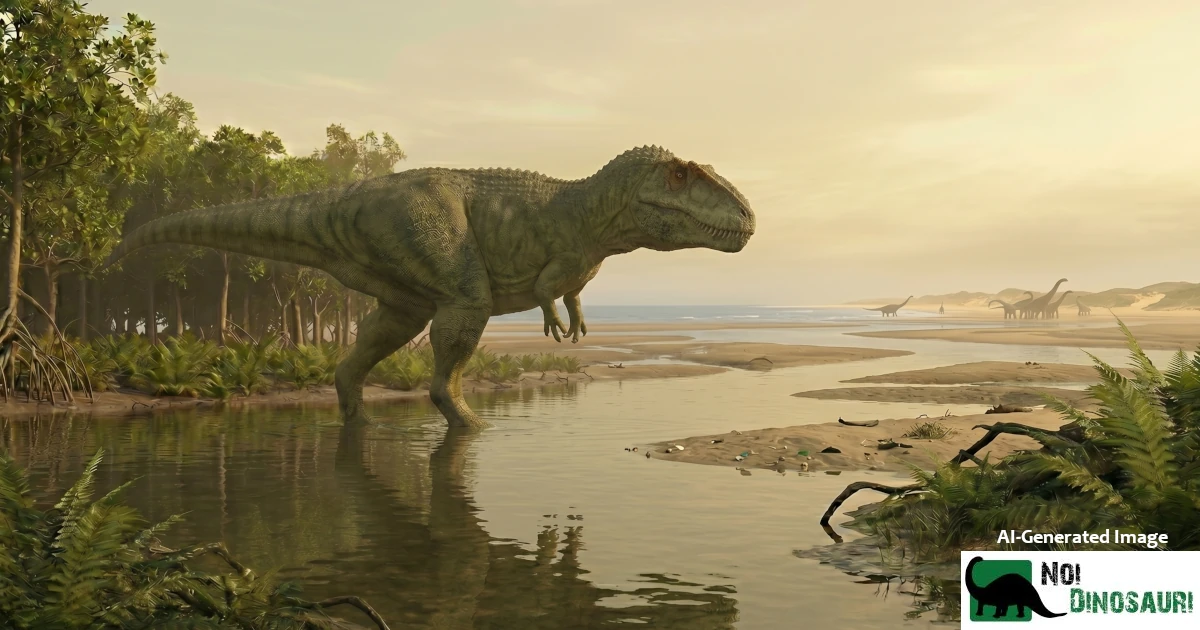
Carcharodontosaurus reigned as the apex predator across a rich, perilous ecosystem on the northern coasts of the ancient supercontinent Gondwana — a region that now forms the arid Sahara Desert. During the Cretaceous, North Africa was a lush labyrinth of mangrove forests, vast river deltas, and coastal plains, with flora dominated by towering conifers, sweeping fern prairies, and some of the very first primitive flowering plants.
As a specialized hypercarnivore, it employed the same devastating bloodletting strategy described in the anatomy section: sudden ambushes, devastating flank bites, rapid retreat. Roaming vast territories from present-day Morocco to Egypt, its primary targets included gigantic sauropods like Paralititan and large ornithopods such as Ouranosaurus.
It shared this immense North African macro-ecosystem with other predators, including the swift theropod Deltadromeus. Near the expansive river basins, it was wise to steer clear of the colossal crocodylomorph Sarcosuchus. Coexistence with Spinosaurus was likely peaceful: the two giants exploited different ecological niches, with the latter dominating the aquatic realm — an equilibrium paleontologists deduce from the complete absence of direct fossil evidence of conflict between the two animals.
Reproduction
Like all large theropods, Carcharodontosaurus almost certainly laid eggs in ground nests, likely scraped into soil or sand in sheltered areas. Its behavior during the breeding season remains largely unknown, though its close relatives suggest it was probably a solitary animal, coming together with others of its kind only briefly. Hatchlings were likely precocial — relatively independent from birth and growing rapidly to reduce vulnerability. It is worth being honest here: the fossil record tells us very little about the reproductive life of this giant, and much remains speculation based on comparisons with better-known theropods.
The Extinction
Carcharodontosaurus did not die with the asteroid. This is one of the most important — and least known — facts about this animal. The Carcharodontosauridae disappeared from the African fossil record approximately 5 to 10 million years before the Cretaceous-Paleogene mass extinction event (~66 million years ago). Their decline was likely driven by a combination of gradual climate shifts, ecosystem transformation, and increasing competition from other large predators moving into their ecological space. They were already gone long before the impact winter darkened the sky — a reminder that extinction is rarely a single catastrophic moment, but often a slow, quiet disappearance.
Curiosity - Did you know?
By analyzing the braincase using high-resolution micro-CT scans, paleontologists discovered that the inner ear anatomy of Carcharodontosaurus — specifically the semicircular canals that regulate balance — closely resembles that of modern crocodiles. This anatomical detail suggests the animal hunted by sweeping its head in broad, lateral motions while keeping its snout angled slightly downward: a posture perfectly suited for tracking and sinking its teeth into the flanks of the massive herbivores crossing its territory.